


What's Happening?
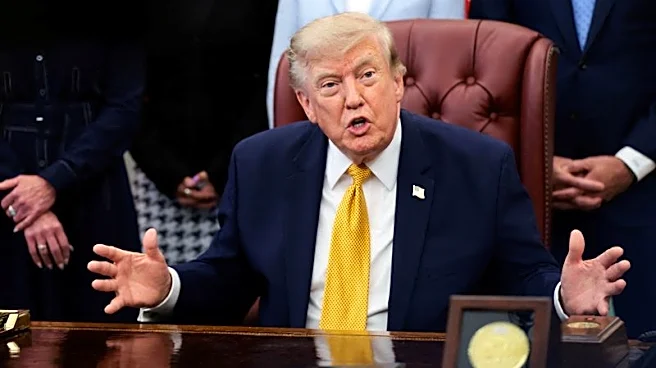
President Trump's executive order on voting, which seeks to give the federal government more control over voter eligibility, is facing legal challenges from blue state attorneys general and some retired judges. The order, which aims to implement changes
before the midterm elections, has been partially blocked by a federal judge. The administration is appealing to the Supreme Court to overturn this decision. The order includes measures such as creating federal lists of eligible voters and using the Postal Service to intercept ballots, which opponents argue infringe on states' constitutional rights to manage elections. The legal battle highlights the tension between federal authority and state rights in election administration.
Why It's Important?
This legal challenge is significant as it addresses the balance of power between federal and state governments in managing elections, a cornerstone of U.S. democracy. The outcome could set a precedent for federal involvement in state-run elections and impact voter access, particularly for mail-in ballots. The case also reflects broader political divisions, with blue states opposing what they see as federal overreach and potential voter suppression. The Supreme Court's decision will have implications for the upcoming midterm elections and could influence future electoral processes and policies.
What's Next?
The Supreme Court's decision on whether to uphold or overturn the lower court's injunction will be pivotal. If the court sides with the Trump administration, it could lead to significant changes in how elections are conducted, potentially affecting voter turnout and election outcomes. The case may also prompt further legal and political debates about the role of federal oversight in elections. Stakeholders, including state governments, civil rights groups, and political parties, will be closely monitoring the court's ruling and its implications for electoral integrity and voter rights.