
What's Happening?
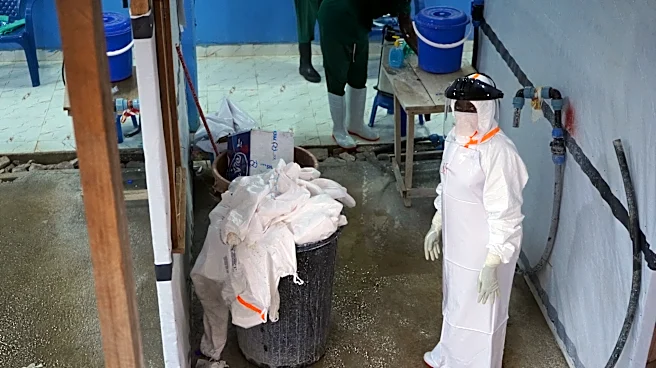
The Ebola outbreak in eastern Congo has resulted in over 1,000 deaths, with the Bundibugyo virus responsible for the spread. The outbreak is concentrated in remote Ituri province but has also affected
neighboring Uganda. Despite efforts to contain the virus, transmission remains high, and the origin of the outbreak is still unknown. The World Health Organization assesses the risk as very high within Congo and high in surrounding regions, though global spread remains low due to the nature of Ebola transmission.
Why It's Important?
The outbreak poses significant challenges to public health efforts in the region, highlighting the need for effective containment strategies and international support. The lack of approved vaccines or treatments for the Bundibugyo virus complicates response efforts. The situation underscores the importance of global health security and the need for robust surveillance and rapid response capabilities to prevent widespread transmission.
What's Next?
Health officials will continue to focus on contact tracing and containment measures to control the outbreak. International aid and support may be necessary to bolster local efforts and provide resources for treatment and prevention. The development of vaccines and treatments for the Bundibugyo virus could be accelerated to address future outbreaks.