



What's Happening?
Japan's largest power generation company, JERA, is advancing its plans to ship low-carbon ammonia from a production facility in Louisiana to Japan. This initiative aims to fuel a power generation plant in Japan, marking the first commercial-scale effort
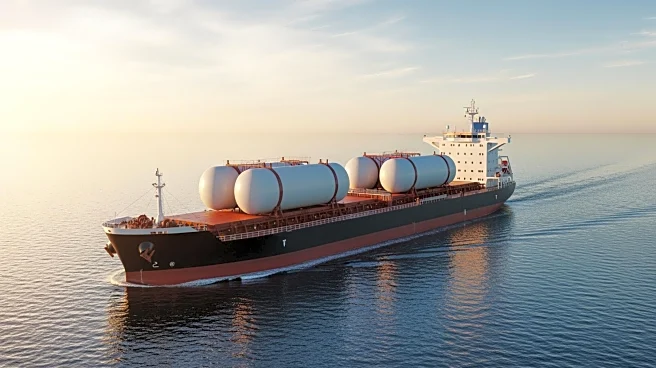
to import ammonia fuel to the country. JERA is collaborating with shipping companies NYK and Mitsui O.S.K. to develop very large gas carriers specifically designed for ammonia transport. The Blue Point ammonia production facility in Louisiana, expected to be the world's largest when operational in 2029, will produce approximately 1.4 million tons of ammonia using natural gas and carbon capture technology. JERA holds a 35 percent interest in the $4 billion project, with plans to supply ammonia to markets in Europe, Asia, and other regions.
Why It's Important?
The development of ammonia as a fuel source is significant for Japan's energy strategy, as the country seeks to reduce its reliance on coal imports and transition to cleaner energy alternatives. By utilizing ammonia, Japan aims to replace coal-fired power generation with ammonia-fueled plants, contributing to its carbon reduction goals. This project also represents a major step in international collaboration for sustainable energy solutions, with potential impacts on global energy markets. The investment in ammonia production and transport infrastructure could stimulate economic growth and technological advancements in both the U.S. and Japan.
What's Next?
As the Blue Point facility progresses towards its 2029 operational date, stakeholders will focus on the development of the necessary transport and receiving systems for ammonia. JERA and its partners will continue to refine the design and operation of ammonia carriers and bunker vessels. The success of this project could encourage further investments in ammonia as a viable energy source, potentially influencing energy policies and market dynamics in other regions. Monitoring the project's impact on global energy supply chains and environmental standards will be crucial.
Beyond the Headlines
The shift towards ammonia as a fuel source highlights broader trends in the energy sector, including the pursuit of low-carbon alternatives and the integration of carbon capture technologies. This development may prompt discussions on the environmental and economic implications of large-scale ammonia production and transport. Additionally, the collaboration between Japanese and American companies underscores the importance of international partnerships in addressing global energy challenges. The project's success could pave the way for similar initiatives worldwide, fostering innovation and sustainability in energy production.