


What's Happening?
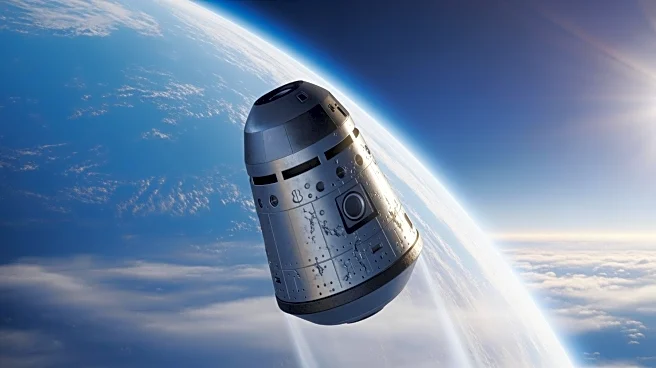
The Shenzhou 20, an uncrewed Chinese space capsule, has successfully returned to Earth after spending 270 days in orbit. The capsule, which was docked at China's Tiangong space station, was delayed in its return due to damage from space debris. The damage,
specifically tiny cracks in the viewport window, prompted an emergency mission to launch the Shenzhou 22 spacecraft to support the crew of Shenzhou 21. Upon landing, the recovery team quickly assessed the damage and secured the capsule. The mission marked the first time the Dongfeng Landing Site conducted a recovery operation during the coldest season, utilizing new recovery methods such as drones.
Why It's Important?
The incident underscores the growing threat of space debris to space missions, highlighting the need for improved debris tracking and mitigation strategies. The successful recovery of the Shenzhou 20 capsule demonstrates China's capability to handle space emergencies and adapt to unforeseen challenges. This event also emphasizes the importance of international cooperation in addressing space debris, as it poses risks to all space-faring nations. The use of new recovery technologies, such as drones, indicates advancements in space mission logistics and safety protocols.
What's Next?
China is likely to continue enhancing its space program, focusing on improving safety measures and developing technologies to mitigate space debris risks. The successful recovery of the Shenzhou 20 capsule may lead to further investments in space infrastructure and emergency response capabilities. Additionally, China may engage in international collaborations to address the global issue of space debris. The upcoming launch of the Shenzhou 23 spacecraft will be closely watched as China continues to expand its presence in space.