





What's Happening?
Iowa Governor Kimberly K. Reynolds has issued a proclamation extending a State of Disaster Emergency for the entire state of Iowa, specifically related to the 2026 grain harvest. This extension, effective immediately, will continue through December 6,
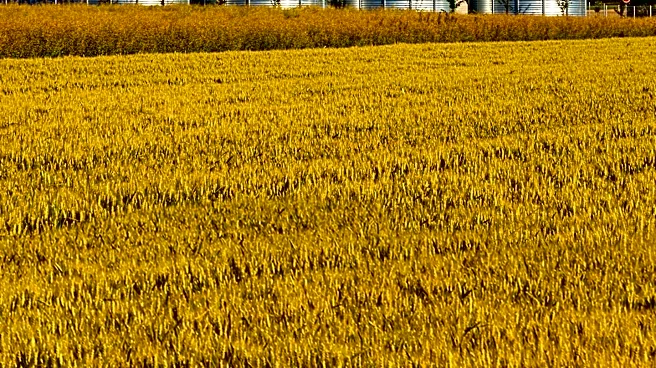
2026. The proclamation temporarily suspends certain regulatory provisions of the Iowa Code and Iowa Administrative Code. These suspended regulations pertain to the movement of overweight loads of agricultural products such as soybeans, corn, hay, straw, silage, stover, soybean meal, distillers grains, fertilizer (dry, liquid, and gas), and manure (dry and liquid). The measure allows these vehicles to operate without a permit, provided they do not exceed 90,000 pounds gross weight, adhere to specific axle weight limits, and comply with posted limits on roads and bridges. The suspension applies to all highways within Iowa, excluding the interstate system. The Iowa Department of Public Safety is tasked with monitoring the operation of this proclamation to ensure public safety and facilitate the movement of trucks during the harvesting season.
Why It's Important?
This extension of the disaster emergency is crucial for Iowa's agricultural sector, a cornerstone of the state's economy. By temporarily suspending regulations on overweight loads, Governor Reynolds aims to prevent hindrances to time-sensitive harvest activities, ensuring the efficient collection and transportation of grain and other agricultural products. The measure directly benefits farmers and agricultural businesses by reducing logistical burdens and potential delays during a critical period. Without this flexibility, strict compliance with weight restrictions could lead to increased transportation costs, slower delivery times, and potential spoilage of crops, ultimately impacting the profitability of the harvest. The decision underscores the state's recognition of the unique challenges faced by the agricultural industry, particularly the need for rapid and efficient movement of goods during harvest season. This action helps maintain the flow of agricultural commodities, which are vital for both local and national food supply chains.
What's Next?
The proclamation will remain in effect until December 6, 2026, unless it is terminated or further extended in writing by Governor Reynolds. During this period, the Iowa Department of Public Safety will actively monitor the implementation of the suspended regulations to ensure public safety while facilitating the harvest. Agricultural producers and transporters will continue to operate under these relaxed weight restrictions, which are designed to ease the logistical pressures of the harvest season. Stakeholders in the agricultural industry will likely continue to advocate for such measures in future harvest seasons, especially if similar conditions arise. The long-term impact of such repeated proclamations could lead to discussions about permanent adjustments to transportation regulations for agricultural goods during peak seasons, balancing efficiency with infrastructure preservation and public safety.
Beyond the Headlines
The repeated issuance of such disaster emergency proclamations for harvest activities highlights a broader tension between regulatory frameworks designed for general road safety and the specific, time-sensitive needs of the agricultural industry. While necessary for efficiency, the consistent allowance of overweight vehicles, even with specified limits, could raise questions about potential long-term impacts on road infrastructure and maintenance costs. This situation also underscores the significant economic and logistical power of the agricultural sector in Iowa, demonstrating the state government's willingness to adapt regulations to support its primary industry. It reflects a pragmatic approach to governance, where immediate economic needs are prioritized through temporary regulatory relief, potentially setting precedents for how states manage seasonal industrial demands versus standing regulations.