


What's Happening?
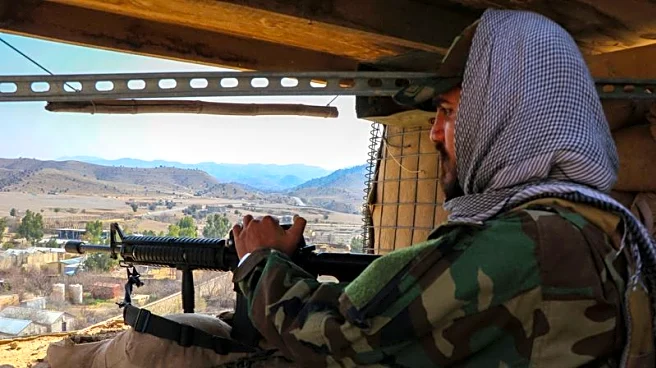
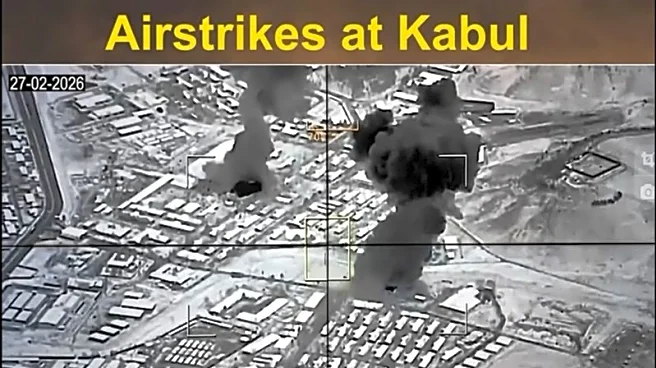
Pakistan has declared an 'open war' with Afghanistan following airstrikes on Taliban government targets in major Afghan cities, including Kabul, Kandahar, and Paktia. The strikes, involving air-to-ground missile attacks, mark a significant escalation
in tensions between the two countries. Pakistan's defense minister described the situation as an 'open war,' citing unprovoked Afghan attacks as the cause. The Taliban has responded with retaliatory attacks on Pakistani military installations. Both sides report heavy losses, with conflicting casualty figures. The conflict stems from accusations of harboring militants, with Pakistan accusing the Taliban of supporting groups that carry out attacks in Pakistan.
Why It's Important?
The declaration of 'open war' by Pakistan against Afghanistan represents a severe escalation in regional tensions, with potential implications for international security. The conflict could destabilize the region, affecting neighboring countries and potentially drawing in global powers. The situation highlights the fragile nature of peace in South Asia, where historical grievances and geopolitical interests intersect. The humanitarian impact is also significant, with reports of civilian casualties and displacement. The conflict could disrupt regional trade and economic activities, further exacerbating the challenges faced by both countries.
What's Next?
The conflict is likely to continue, with both sides engaging in further military operations. International efforts to mediate and de-escalate tensions may intensify, with countries like Russia, China, and Iran potentially playing key roles. The situation could lead to increased regional instability, affecting neighboring countries and potentially drawing in international powers. The humanitarian situation may worsen, with more civilian casualties and displacement expected if the conflict continues.