







What's Happening?
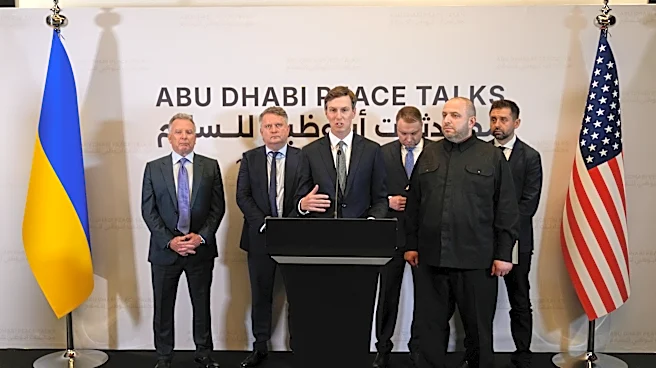
U.S.-mediated discussions between Russian and Ukrainian delegations in Abu Dhabi have concluded with an agreement for a significant prisoner of war exchange. Jared Kushner, President Trump's son-in-law, announced the agreement, stating it would be the 'biggest
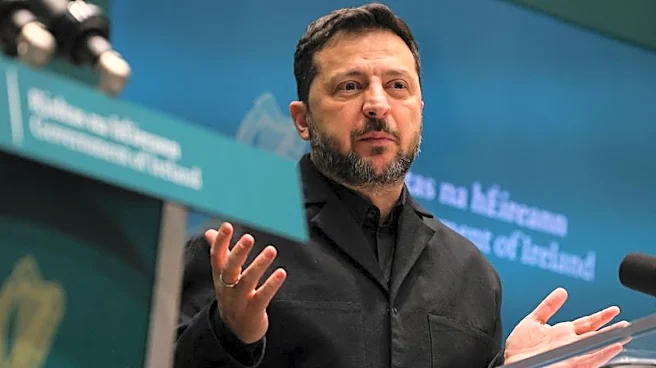
humanitarian release of prisoners,' with final numbers to be determined. The head of the Russian delegation, Vladimir Medinsky, and the head of Kyiv's delegation, Rustem Umerov, confirmed the planned exchange. These talks mark the first direct meeting between the delegations in nine months. While a major breakthrough on ending the conflict was not anticipated, the agreement on a prisoner swap represents a concrete outcome. U.S. officials, including Kushner and U.S. envoy Steve Witkoff, are scheduled to travel to Moscow to meet with President Vladimir Putin and then to Dublin to meet with Ukrainian President Volodymyr Zelenskyy to continue peace efforts. The negotiations also touched upon broader humanitarian issues, including the return of Ukrainian civilians and children, as well as security guarantees, though no compromise on core demands was indicated.
Why It's Important?
This agreement on a large-scale prisoner exchange is significant as it demonstrates a rare instance of direct humanitarian cooperation between Russia and Ukraine amidst ongoing hostilities. For the United States, facilitating such an exchange underscores its continued diplomatic engagement in the conflict, even as broader peace efforts remain challenging. The involvement of President Trump's son-in-law, Jared Kushner, highlights a direct White House interest in these negotiations. A successful prisoner swap could alleviate some humanitarian suffering and potentially build a small degree of trust, which is crucial for any future de-escalation or peace talks. However, the lack of progress on core demands from either side indicates that a comprehensive resolution to the conflict remains distant. The U.S. diplomatic push, including planned meetings with both President Putin and President Zelenskyy, signals a sustained effort to find pathways for peace, even as the conflict continues to exact a heavy toll on both nations.
What's Next?
Following the agreement in Abu Dhabi, the immediate next step is the finalization of the numbers for the prisoner exchange, which is expected to be completed soon. U.S. envoy Steve Witkoff and Jared Kushner are scheduled to travel to Moscow to meet with President Vladimir Putin and then to Dublin to meet with Ukrainian President Volodymyr Zelenskyy. These meetings will likely focus on further humanitarian efforts, potential de-escalation strategies, and exploring avenues for broader peace discussions. The context of these negotiations is evolving, with the Trump administration needing to consider potential demands for increased support for Ukraine from Democrats, who are set to take over the U.S. Congress in January. While the prisoner exchange is a positive development, significant challenges remain, as both Russia and Ukraine have shown no willingness to compromise on their fundamental demands. The ongoing conflict, marked by continued fighting and long-range attacks, will likely influence the tenor and progress of future diplomatic engagements.
Beyond the Headlines
The agreement on a prisoner exchange, while a humanitarian positive, also subtly highlights the complex interplay of diplomacy and ongoing conflict. The U.S. role as a mediator, particularly with high-profile figures like Jared Kushner involved, signals a continued commitment to finding solutions, even if incremental. This engagement occurs against a backdrop of intense military activity, including significant drone attacks by both sides just prior to and during the talks, underscoring the disconnect between diplomatic efforts and the realities on the ground. The willingness of both Russia and Ukraine to engage in these U.S.-mediated talks, despite their deep-seated animosities, suggests that both parties may see some strategic value in maintaining channels of communication, even if only for humanitarian purposes. This could also be interpreted as an attempt by both sides to project an image of openness to dialogue, potentially influencing international perceptions and support.