


What's Happening?
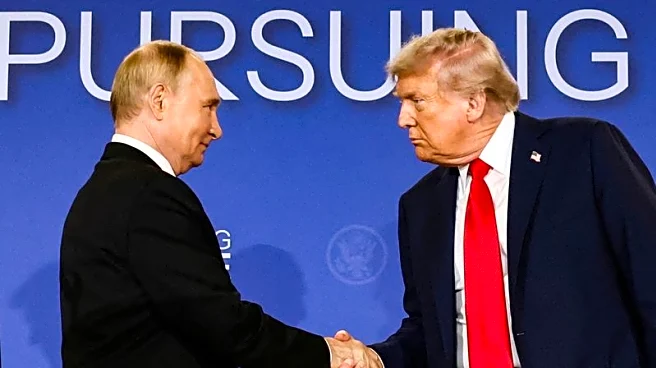
President Trump has announced his intention to negotiate a new strategic-arms treaty with Russia after the expiration of the previous major nuclear agreement. This announcement comes amid a backdrop of warming relations between the U.S. and Russia, as evidenced
by the recent agreement to reestablish high-level military dialogue. The previous treaty, which was a cornerstone of nuclear arms control, lapsed without a replacement, raising concerns about the future of nuclear arms regulation. President Trump has not yet detailed how he plans to address the nuclear capabilities of Russia, China, and the U.S. in the proposed new treaty.
Why It's Important?
The call for a new nuclear pact is significant as it addresses the potential for an arms race among major nuclear powers. The absence of a treaty could lead to increased nuclear proliferation and heightened global tensions. A new agreement could stabilize international relations and reduce the risk of nuclear conflict. The U.S. stands to gain from a treaty that limits nuclear arms, potentially leading to a more secure global environment. However, the complexity of negotiating such a treaty, especially with the inclusion of China, presents a significant diplomatic challenge.
What's Next?
Negotiations for a new treaty will likely involve complex discussions with both Russia and potentially China. The U.S. will need to navigate these talks carefully to achieve a balanced agreement that addresses the concerns of all parties involved. The reestablishment of military dialogue with Russia could facilitate these discussions, but the process is expected to be lengthy and challenging. The international community will be closely watching these developments, as the outcome could have far-reaching implications for global security.