




What's Happening?
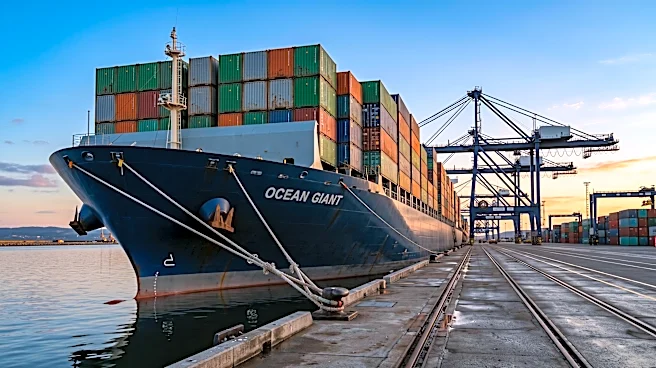
Malaysia has detained several containers passing through its Port of Tanjung Pelepas that were bound for Israel. Malaysian Prime Minister Anwar Ibrahim confirmed these actions, stating that Malaysia will not allow its country to be used as a conduit for shipments
that support or contribute to Israel's military capabilities. This marks the second time Malaysia has detained Israel-bound cargo, with a similar incident occurring earlier in August. The detained containers include three carrying electric bicycle parts from China destined for the Port of Ashdod, and another shipment from the Philippines suspected of containing weapons, intended for the Israeli defense technology company Elbit Systems. Malaysia, which lacks diplomatic or trade relations with Israel, has a clear stance against facilitating trade that could aid Israel's military.
Why It's Important?
This action by Malaysia highlights the increasing international scrutiny and economic pressure being placed on Israel by nations that oppose its military actions. While Malaysia's direct trade with Israel is minimal, its strategic location along major shipping routes means that its decision to inspect and detain transit cargo can disrupt supply chains and increase logistical complexities for companies trading with Israel. This move could set a precedent for other countries with similar political stances to implement stricter controls on goods passing through their territories, potentially impacting global shipping and trade dynamics. For U.S. businesses and allies, this situation underscores the geopolitical risks associated with international trade and the potential for political tensions to translate into tangible economic barriers.
What's Next?
Malaysian authorities are continuing their inspection and investigation of the detained shipments in accordance with Malaysian law. Prime Minister Ibrahim has indicated that decisive action will be taken if violations are established. This could lead to the permanent confiscation of goods or further restrictions on shipping routes. The ongoing investigations may also prompt reactions from international shipping companies and trade organizations, who might need to reassess their routes and policies to navigate such geopolitical complexities. The incident could also encourage other nations to adopt similar measures, potentially leading to a more fragmented global trade environment where political alignment increasingly dictates shipping access and trade flows.
Beyond the Headlines
The detention of these containers reflects a deeper geopolitical shift where economic leverage is being increasingly used as a tool in international relations. Malaysia's actions are rooted in its long-standing anti-Israel sentiments and its pro-Palestinian stance, which has intensified since recent conflicts. This move goes beyond simple trade restrictions, signaling a moral and political statement against perceived military actions. It also raises questions about the sovereignty of transit routes and the extent to which nations can impose their political will on international commerce. The incident could contribute to a broader trend of 'de-globalization' or 'friend-shoring,' where countries prioritize trade with politically aligned partners, potentially reshaping global economic alliances and supply chain resilience.