






What's Happening?
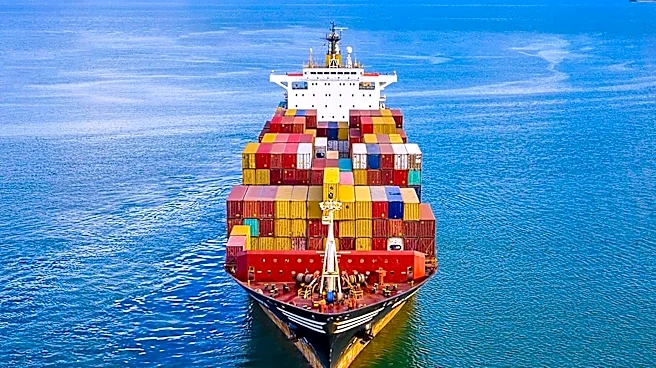
India is preparing to send its inaugural cargo ship along the Northern Sea Route (NSR) in 2027. This initiative aims to bolster connectivity with Russia and develop new economic nodes. Discussions are underway between Russia's Arkhangelsk region and New
Delhi to explore economic potential and collaboration opportunities. These opportunities include shipbuilding and leveraging port facilities for cargo movement. The Northern Sea Route is recognized for its potential to significantly reduce travel distances and transit times for trade with Europe, offering an alternative to traditional maritime routes. This move is part of a broader strategy to diversify global supply chains and strengthen trade relations between India and Russia.
Why It's Important?
This development holds significant implications for global trade and geopolitical dynamics. The Northern Sea Route offers a considerably shorter maritime passage between Europe and Asia compared to the Suez Canal, potentially reducing shipping times and costs. For India, this new route could enhance its trade efficiency with Russia and other European nations, fostering economic growth and reducing reliance on existing, often congested, trade arteries. For Russia, increased utilization of the NSR, particularly by a major economic power like India, would validate its strategic investments in Arctic infrastructure and reinforce its position as a key player in Arctic shipping. This collaboration could also lead to new industrial partnerships, such as in shipbuilding, and further integrate the economies of both nations, potentially reshaping regional trade patterns and influencing global logistics.
What's Next?
Following the planned maiden voyage in 2027, India and Russia are expected to continue discussions on expanding their economic and logistical cooperation along the Northern Sea Route. This will likely involve further investments in port infrastructure, icebreaker fleets, and navigational support systems to ensure the route's viability and safety for increased cargo traffic. Both nations will also need to address the environmental challenges and regulatory frameworks associated with Arctic shipping. The success of this initial venture could pave the way for more frequent voyages and potentially attract other nations to utilize the NSR, leading to a gradual shift in global shipping routes. Stakeholders, including shipping companies, logistics providers, and international trade organizations, will closely monitor the operational efficiency and economic benefits of this new corridor.
Beyond the Headlines
The utilization of the Northern Sea Route by India extends beyond mere economic benefits, touching upon significant geopolitical and environmental considerations. Geopolitically, it signifies a deepening of strategic ties between India and Russia, potentially influencing the balance of power in the Arctic region and global trade. Environmentally, the increased shipping activity in the Arctic raises concerns about the impact on fragile ecosystems, including potential oil spills, noise pollution, and the disruption of marine life. The melting of Arctic ice, while making the route more accessible, also highlights the broader issue of climate change. This initiative could accelerate the development of Arctic resources and infrastructure, leading to both economic opportunities and heightened environmental responsibilities for all nations involved. The long-term implications will depend on how effectively these challenges are managed and how the route integrates into the complex web of international trade and environmental governance.