






What's Happening?
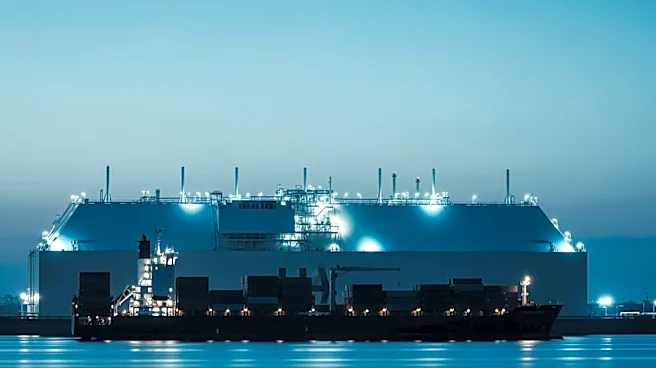
A cargo of liquefied natural gas (LNG) from Russia's Portovaya plant, which is under U.S. sanctions, is en route to India. This marks a significant development as it would be the first delivery to India since President Trump stated that Prime Minister
Narendra Modi assured him India would cease purchasing Russian energy. Despite this, India has not publicly confirmed such a pledge, emphasizing that its energy purchasing decisions are driven by price, supply security, and consumer interests. The Portovaya plant, operational since September 2022, has faced interruptions due to sanctions imposed over the Ukraine conflict. These sanctions aim to disrupt Russia's LNG production and export capabilities. Prior to these sanctions, Portovaya shipped two cargoes monthly during winter, but since March 2025, it has been sending one cargo per month to Kaliningrad.
Why It's Important?
The potential delivery of Russian LNG to India represents a shift in global energy markets, particularly for U.S.-sanctioned Russian LNG. If successful, this delivery would open a new market for Russian LNG, which has primarily been directed to China since the sanctions. This move could undermine U.S. efforts to isolate Russian energy exports and reduce Russia's revenue from LNG trade. For India, as one of the world's largest energy importers, securing diverse energy sources is crucial amid disruptions and price hikes caused by geopolitical tensions, such as the Middle Eastern conflict and the closure of the Strait of Hormuz. The development could also influence global LNG pricing and supply dynamics, affecting energy security and economic strategies in the region.
What's Next?
If the LNG cargo successfully reaches India, it could prompt further shipments from Russia to India, potentially altering the landscape of global energy trade. This might lead to increased diplomatic and economic interactions between India and Russia, challenging U.S. sanctions. Additionally, other countries may follow suit, seeking to diversify their energy sources amid geopolitical tensions. The U.S. may respond by tightening sanctions or engaging in diplomatic efforts to discourage such transactions. The situation could also impact future negotiations between the U.S. and India regarding energy security and trade policies.