
What's Happening?
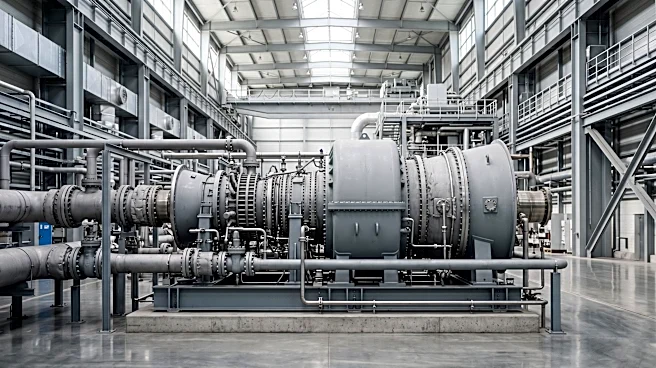
Western Refining Terminals LLC, a subsidiary of Marathon Petroleum Corp., is seeking to amend the air-quality permit for its Albuquerque Products Terminal. The proposed changes would increase the facility’s permitted emissions of volatile organic compounds
(VOCs) by 15.36 tons per year, an amount estimated by the U.S. Environmental Protection Agency to be roughly equivalent to the annual VOC emissions of 1,100 gasoline-powered cars. VOCs contribute to the formation of ground-level ozone, or smog, which can cause respiratory illnesses. The company's initial application in July listed a lower increase, but a revised application was submitted in October after city staff identified a mathematical error where 'pi' was omitted from calculations, making storage tanks appear smaller than their actual size. The proposed amendments include adding two diesel loading arms, allowing two diesel tanks to store gasoline, updating fuel specifications, and installing a temporary combustion unit for vapor burning during maintenance. Marathon Petroleum states these changes offer regional supply flexibility without expanding storage capacity, arguing that permit limits reflect maximum potential releases rather than continuous emissions. However, community advocates, including Yasmin Khan of the Barelas Neighborhood Association, contend that higher limits will lead to more air pollution.
Why It's Important?
This permit amendment request by Marathon Petroleum's subsidiary carries significant implications for public health and environmental policy in Albuquerque's South Valley. The proposed increase in VOC emissions directly impacts air quality, potentially exacerbating respiratory illnesses among residents. The discrepancy in the initial application, where a mathematical error led to an underestimation of emissions, raises questions about the rigor of environmental impact assessments and regulatory oversight. For Marathon Petroleum, securing this permit is crucial for operational flexibility and potentially increasing throughput at its Albuquerque terminal, which could enhance its regional supply chain capabilities. However, the strong community opposition, supported by local officials like Bernalillo County Commissioner Frank Baca and Albuquerque City Councilor Joaquín Baca, highlights a growing tension between industrial expansion and environmental protection. The outcome of this permit request could set a precedent for how industrial facilities are regulated in urban areas, particularly concerning air quality standards and community engagement in environmental decision-making.
What's Next?
The public comment period for Marathon Petroleum's permit amendment request closed on November 12. Following this, officials from the Environmental Health Department will evaluate whether to hold a public hearing. A hearing will be convened if officials determine there is both significant public interest and a significant air quality issue. Community advocates, such as Yasmin Khan, have been actively encouraging residents to submit forms demanding a public hearing to ensure their concerns are addressed. The decision by the Environmental Health Department will be a critical next step, determining the level of public scrutiny and potential for further debate on the proposed changes. If a hearing is granted, it will provide a platform for residents, environmental groups, and Marathon Petroleum to present their cases, potentially influencing the final decision on the permit amendment. The process will test the city's commitment to balancing industrial development with public health and environmental safeguards.
Beyond the Headlines
The situation in Albuquerque extends beyond a single permit request, touching upon broader themes of environmental justice and corporate accountability. The community's concerns about increased pollution, particularly VOCs that contribute to smog and respiratory issues, underscore the disproportionate impact of industrial operations on local populations, often in historically underserved areas. The initial mathematical error in Marathon Petroleum's application, which understated potential emissions, highlights a systemic challenge in environmental regulation: the reliance on corporate self-reporting and the need for robust independent verification. This incident could fuel calls for stricter oversight and more transparent processes in environmental permitting. Furthermore, the active engagement of neighborhood associations and local political figures demonstrates the increasing power of grassroots movements in shaping environmental policy and holding corporations accountable for their environmental footprint. The outcome will likely influence future environmental activism and regulatory approaches to industrial expansion across the U.S.