






What's Happening?
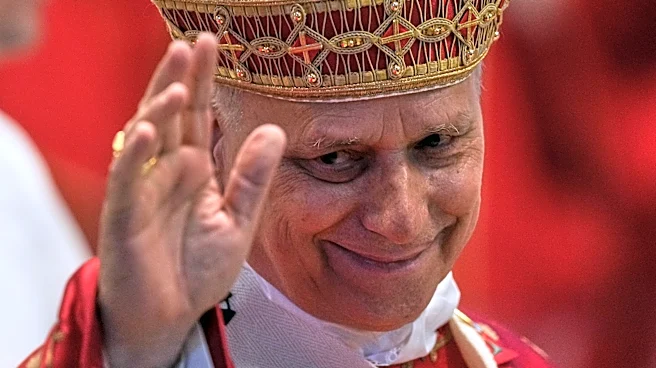
Cardinal Blase Cupich of Chicago has emerged as a significant moral leader in the United States, known for his compassionate voice and strong public positions on social justice issues. Appointed by Pope Francis as the Archbishop of Chicago in 2014 and elevated
to cardinal in 2016, Cupich oversees the Archdiocese of Chicago, which serves nearly 2 million Catholics. He is recognized for his kindness, intellect, and diplomacy, and has been a vocal advocate for immigrants, emphasizing their dignity and contributions to the country. Cupich has also been critical of the U.S. foreign policy, particularly the military actions in Iran, and has called for a foreign policy that respects human life and dignity.
Why It's Important?
Cardinal Cupich's leadership is significant as it highlights the role of religious figures in advocating for social justice and influencing public policy. His stance on immigration and foreign policy challenges the current political climate, urging a more humane and ethical approach. By speaking out against the militarization of foreign policy and the treatment of immigrants, Cupich provides a moral framework that could influence both public opinion and policy decisions. His advocacy for a 'genuinely moral' American foreign policy underscores the potential for religious leaders to impact national and international discourse on human rights and dignity.
What's Next?
As Cardinal Cupich continues to advocate for social justice, his influence may encourage other religious and community leaders to take similar stands on critical issues. His ongoing dialogue with political leaders and the public could lead to increased awareness and potential policy changes regarding immigration and foreign policy. The cardinal's emphasis on peacemaking and dialogue suggests a continued effort to foster understanding and cooperation among diverse groups, potentially leading to broader societal shifts towards inclusivity and respect for human dignity.
Beyond the Headlines
Cardinal Cupich's approach to leadership highlights the intersection of faith and politics, raising questions about the role of religious institutions in shaping public policy. His emphasis on moral statesmanship and peacemaking offers a counter-narrative to the often divisive political rhetoric, promoting a vision of leadership grounded in compassion and ethical responsibility. This perspective may inspire long-term cultural shifts towards more empathetic and inclusive governance, challenging leaders to prioritize the common good over narrow interests.