


What's Happening?
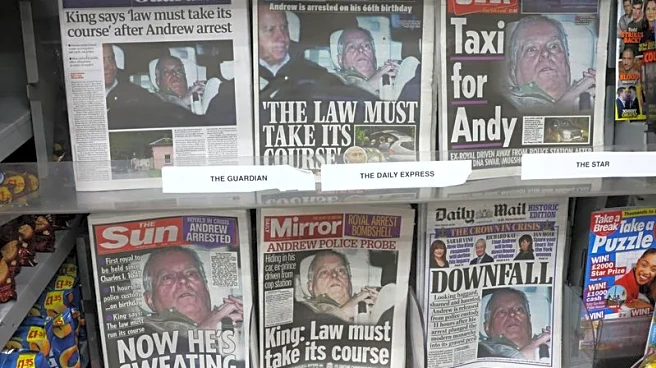
Andrew Mountbatten-Windsor, formerly Prince Andrew, was arrested on suspicion of misconduct in public office, related to allegations of sharing sensitive trade secrets with Jeffrey Epstein. Following his arrest, Andrew was released from police custody,
and authorities continue to investigate the claims. The arrest has reignited public debate over the monarchy's accountability and the implications of Andrew's ties to Epstein. King Charles III has expressed support for law enforcement and emphasized the importance of allowing the legal process to unfold without interference. The situation has drawn attention to the monarchy's handling of scandals and its impact on public trust.
Why It's Important?
The arrest of Andrew Mountbatten-Windsor highlights ongoing concerns about the monarchy's role in addressing allegations of misconduct and its ability to maintain public trust. The case underscores the challenges faced by the royal family in managing scandals and the potential impact on its reputation. The investigation into Andrew's actions could have broader implications for the monarchy's future, particularly in terms of transparency and accountability. The public's response to the case may influence discussions on the monarchy's role in modern society and the need for potential reforms to ensure greater oversight and accountability.
What's Next?
As the investigation into Andrew's alleged misconduct continues, the monarchy faces pressure to demonstrate accountability and transparency. The outcome of the investigation and any subsequent legal proceedings will likely impact the monarchy's reputation and its relationship with the public. The case may also prompt discussions on the monarchy's future and potential reforms to ensure greater accountability. Additionally, the situation could influence public perceptions of the monarchy's role in addressing allegations of misconduct and its ability to maintain public trust.