
What's Happening?
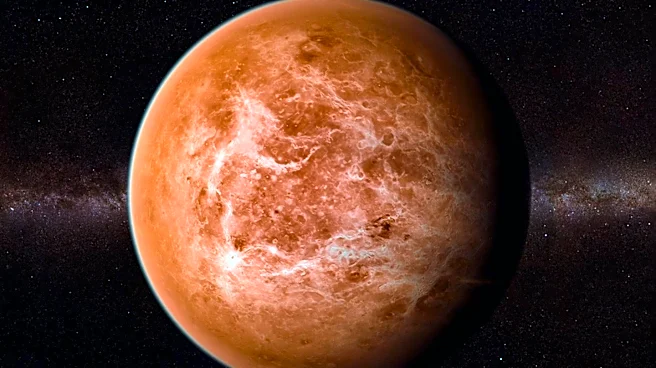
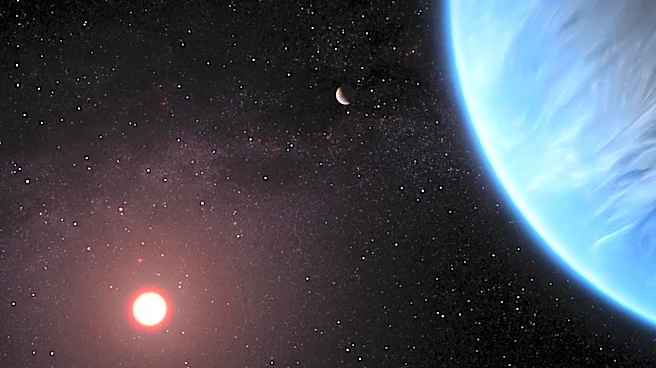
Astronomers have confirmed the existence of GJ 887 d, a potentially habitable planet located 10.7 light-years away from Earth. This planet orbits a red dwarf star, GJ 887, and is the second-closest known
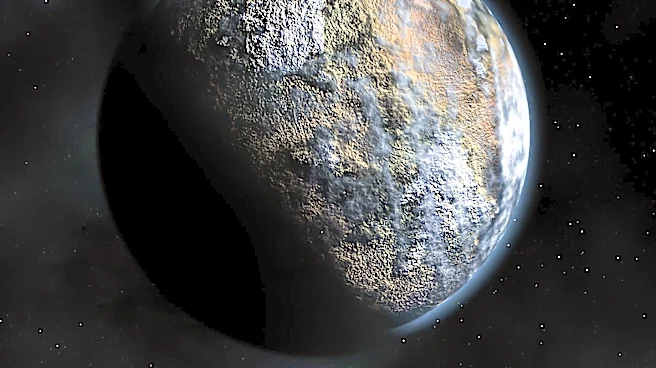
planet in a star's habitable zone after Proxima Centauri b. The confirmation was made using radial velocity measurements, which detected the planet's gravitational influence on its star. GJ 887 d has a minimum mass about six times that of Earth, but its exact nature, whether rocky or gas-rich, remains unknown. The planet's potential habitability is still under investigation, as factors like its atmosphere and magnetic field are yet to be determined.
Why It's Important?
The discovery of GJ 887 d is significant for the search for extraterrestrial life and the study of exoplanets. Its proximity to Earth makes it an ideal candidate for future observations and studies, potentially providing insights into the conditions necessary for life beyond our solar system. The planet's location in the habitable zone suggests it could have conditions suitable for liquid water, a key ingredient for life. This discovery also highlights the capabilities of current astronomical techniques and the potential for future missions to explore nearby star systems.
What's Next?
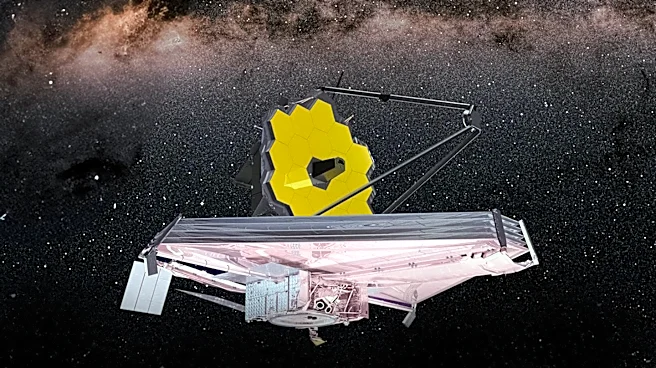
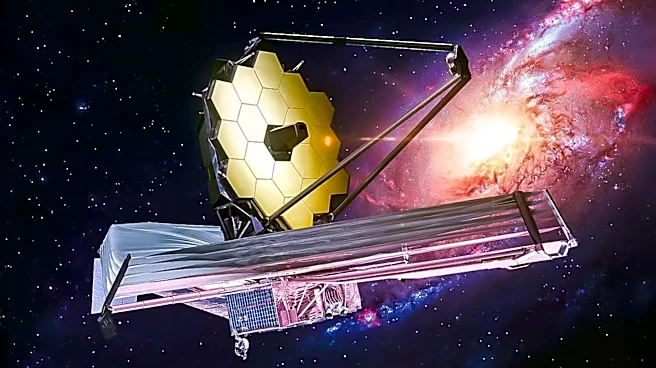
Further research is needed to determine the atmospheric composition and surface conditions of GJ 887 d. Upcoming telescopes and space missions may focus on direct imaging and spectroscopic analysis to gather more data. These efforts could reveal whether the planet has an atmosphere, oceans, or other features that support life. The study of GJ 887 d will contribute to our understanding of planetary formation and the diversity of planetary systems in our galaxy.