






What's Happening?
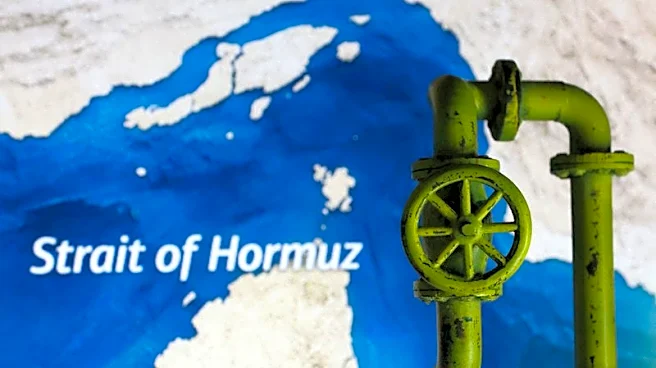
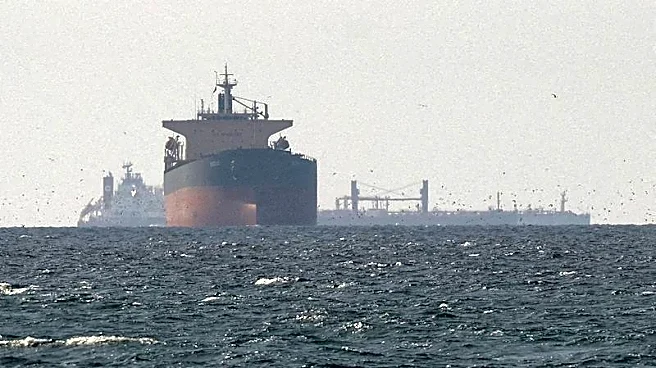
Hapag-Lloyd has expressed cautious optimism about resuming shipping operations through the Strait of Hormuz following a two-week ceasefire agreement between the U.S. and Iran. CEO Rolf Habben Jansen stated that while the ceasefire is a positive development,
the conflict in the Middle East continues to disrupt shipping and supply chains. The company anticipates that normal shipping traffic will take six to eight weeks to resume fully. Hapag-Lloyd is considering reopening bookings for the upper Gulf area, contingent on the ceasefire holding in the coming days. The company has estimated additional costs from the crisis at $50 million to $60 million per week, which may be passed on to customers.
Why It's Important?
The resumption of shipping through the Strait of Hormuz is crucial for global trade, as the region is a key maritime route for oil and goods. The ongoing disruptions have significant implications for supply chains and shipping costs, affecting businesses worldwide. Hapag-Lloyd's decision to potentially pass on increased costs to customers highlights the economic impact of geopolitical tensions on the shipping industry. The situation underscores the vulnerability of global trade to regional conflicts and the importance of stability in critical shipping lanes.
What's Next?
If the ceasefire holds, Hapag-Lloyd plans to gradually reopen bookings for shipping in the affected areas. The company will continue to monitor the situation closely, seeking further security assurances before fully resuming operations. Other shipping companies, like Maersk, are also likely to follow suit, depending on the stability of the ceasefire. The broader shipping industry will be watching developments closely, as any escalation could lead to further disruptions and increased costs.