



What's Happening?
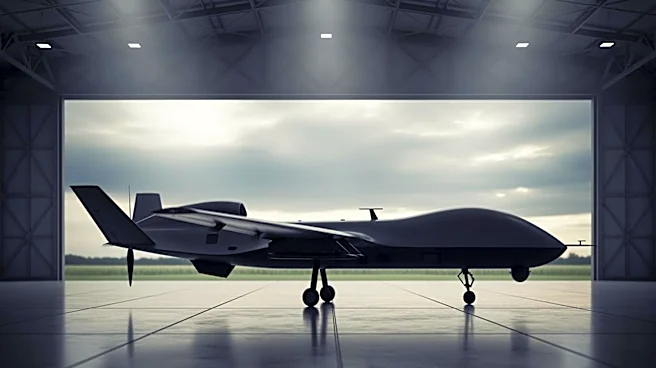
A General Atomics Aeronautical Systems YFQ-42A collaborative combat aircraft (CCA) experienced a crash in California. The incident occurred shortly after the aircraft took off from a company-owned airport. Fortunately, no injuries were reported. General Atomics is
currently assessing the condition of the aircraft and has initiated an investigation to determine the root cause of the crash. The YFQ-42A is part of a low-rate initial production for the U.S. Air Force and is regularly used for operational test and evaluation. As a precaution, General Atomics has temporarily suspended all YFQ-42A operations until further notice. The YFQ-42A is one of two uncrewed aircraft competing in the U.S. Air Force's CCA Increment 1 competition, which aims to acquire 100-150 CCAs by the end of the decade.
Why It's Important?
The suspension of YFQ-42A flights could impact the U.S. Air Force's timeline for integrating collaborative combat aircraft into its operations. These aircraft are crucial for enhancing the Air Force's capabilities in uncrewed operations, which are increasingly important in modern warfare. The incident underscores the challenges and risks associated with developing and deploying advanced military technology. The investigation's findings could influence future safety protocols and operational procedures for uncrewed aircraft. Additionally, the outcome may affect the competitive landscape of the CCA Increment 1 program, potentially impacting the selection process and future contracts.
What's Next?
General Atomics will continue its investigation to determine the cause of the crash. Once the investigation is complete, the company will likely implement any necessary changes to improve safety and reliability. The U.S. Air Force will monitor the situation closely, as the findings could influence its decision-making process regarding the CCA Increment 1 competition. Depending on the investigation's outcome, there may be adjustments to the program's timeline or requirements. Other stakeholders, including competing manufacturers and military strategists, will also be interested in the results, as they could have broader implications for the future of uncrewed military aviation.