
What's Happening?
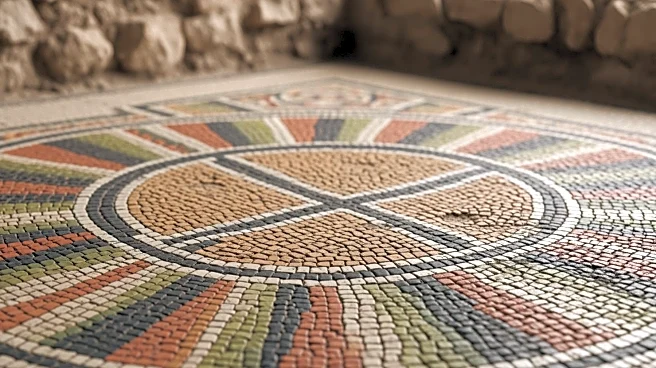
Archaeologists have discovered a unique mosaic-style patolli game board at the Classic Period Maya city of Naachtun in Guatemala. The board, embedded in the floor of a structure within the Group 6L13 complex,
is the first of its kind made in this style and offers new insights into the ancient game. Patolli, a game played with colored pebbles and beans, was popular among the Mexica and other Mesoamerican cultures. The board's mosaic construction, using red tesserae from broken ceramic vessels, is unprecedented and suggests a specific social context for its creation, possibly linked to construction workers or festive mobilization.
Why It's Important?
The discovery of the mosaic patolli board provides valuable insights into the cultural and social practices of the ancient Maya civilization. It highlights the significance of games in Maya society, not only as a form of entertainment but also as a means of social interaction and cultural expression. The unique construction of the board suggests it may have been used during specific social events, offering a glimpse into the social dynamics and labor practices of the time. This finding contributes to a deeper understanding of Maya culture and the role of games in ancient societies.