



What's Happening?
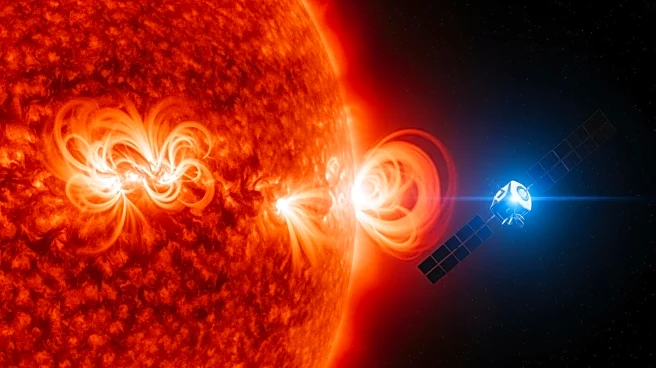
NASA has reported the occurrence of four strong solar flares over recent days, raising concerns about potential disruptions to satellite technology and the possibility of visible northern lights displays. The solar flares, which are large eruptions of electromagnetic
radiation from the sun, were recorded on Sunday and Monday. According to NASA, these flares were classified within the 'X-class,' indicating their intensity. The second flare on Sunday was particularly notable, classified as an X8.1 flare, the strongest in several years. The National Oceanic and Atmospheric Administration (NOAA) warns that these flares can cause signal loss in high-frequency communication bands, potentially leading to disruptions lasting from minutes to hours. Solar flares often precede Coronal Mass Ejections (CME), which can further impact Earth's atmosphere and technology.
Why It's Important?
The occurrence of these solar flares is significant due to their potential impact on satellite communications and the broader technological infrastructure. High-frequency communication bands, which are crucial for various services, could experience disruptions, affecting both civilian and military operations. Additionally, the interaction of solar flares with Earth's atmosphere can lead to the northern lights, a natural phenomenon that, while visually stunning, indicates the presence of geomagnetic activity that can affect power grids and navigation systems. The ongoing solar activity is part of the sun's 11-year cycle, which is currently at a peak phase, suggesting that such events may continue to occur with some frequency.
What's Next?
As the sun continues its active phase, space-weather experts will likely remain vigilant in monitoring solar activity. The NOAA and other agencies may issue further warnings or advisories if additional solar flares or CMEs are detected. Stakeholders in the telecommunications and satellite industries may need to prepare for potential disruptions and consider contingency plans to mitigate the impact on services. Additionally, the public may be advised on how to protect sensitive electronic equipment during periods of heightened solar activity.