





What's Happening?
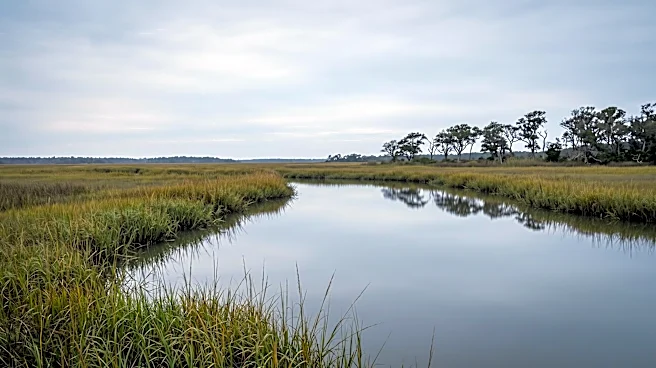
Saylor Hayes, a nonverbal 5-year-old girl from Virginia, was found deceased in a South Carolina waterway on Monday morning after she wandered off from her family's vacation rental home in Hagley Estates, Pawleys Island, on Sunday. The Georgetown County
Sheriff’s Office announced that her body was discovered around 9:45 a.m. by agents with the South Carolina Department of Natural Resources, near where she was last seen. Saylor was wearing a light blue bathing suit and a pink and white lanyard with a tracking device around her ankle. An intensive search involving hundreds of people and multiple agencies, including drones, K-9 units, divers, and Project Lifesaver equipment, was conducted to locate her. Project Lifesaver is a search-and-rescue program designed for individuals with cognitive conditions prone to wandering.
Why It's Important?
This tragic incident highlights the critical dangers faced by nonverbal children and individuals with cognitive conditions who are prone to wandering, particularly in unfamiliar environments like vacation rentals. The use of a tracking device, while a proactive measure, underscores the challenges in rapidly locating vulnerable individuals, especially near natural hazards such as waterways. The extensive community and multi-agency response demonstrates the significant public concern and the resources mobilized in such emergencies. This event may prompt increased awareness among vacation rental property owners and families about implementing enhanced safety protocols, such as child-proofing measures and immediate notification systems, to prevent similar occurrences. It also brings attention to the need for more effective and widespread use of tracking technologies and community preparedness for searching for individuals with special needs.
What's Next?
Authorities have not yet released the cause of Saylor Hayes' death, and an investigation is likely underway to determine the circumstances surrounding her disappearance and death. This will involve examining the effectiveness of the tracking device, the timeline of events, and any potential contributing factors. The incident may lead to discussions among local authorities and community groups about improving emergency response protocols for missing vulnerable individuals, particularly in tourist areas. Families with nonverbal children or those with cognitive conditions might be encouraged to review and enhance their personal safety plans, including the use of advanced tracking technologies and communication strategies. There could also be calls for increased public education on the risks of wandering and how communities can better support families with vulnerable members.
Beyond the Headlines
The heartbreaking loss of Saylor Hayes extends beyond the immediate tragedy, touching upon broader societal issues concerning the safety and inclusion of individuals with cognitive conditions. It raises questions about the adequacy of current safety measures in public and private spaces, especially in transient settings like vacation rentals, for those who cannot communicate their needs or navigate complex environments. The community's overwhelming response, with volunteers traveling long distances and employing creative search methods, reflects a deep sense of collective responsibility and empathy. This incident could spark a re-evaluation of how communities and service providers support families with special needs, potentially leading to policy changes, improved accessibility, and enhanced safety standards in public accommodations. It also underscores the emotional toll such events take on first responders and volunteers, highlighting the psychological impact of these intensive search and rescue operations.