
What's Happening?
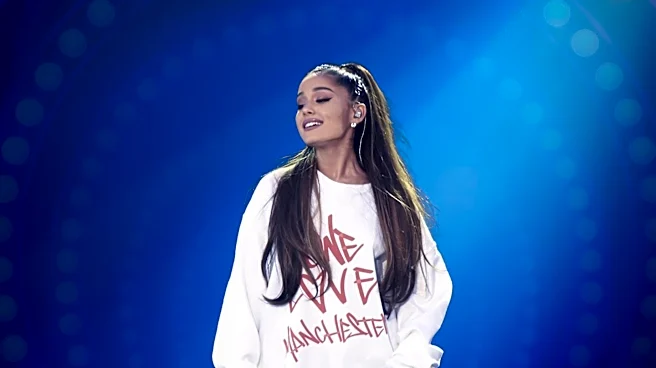
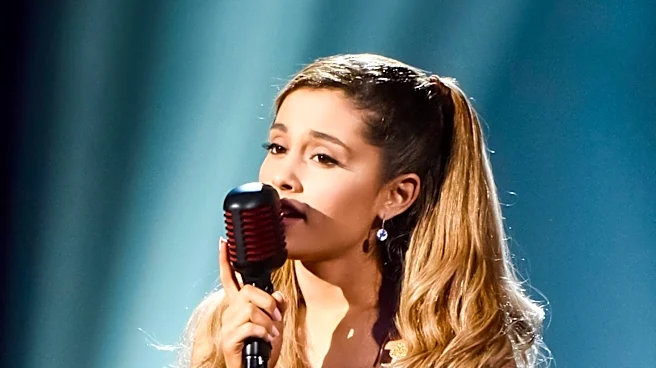
Ariana Grande has publicly condemned President Trump's team for using her song 'We Can't Be Friends' without authorization in a TikTok video. The video featured President Trump on a stage with overlaid
text displaying lyrics from the song, followed by an anti-transgender statement: 'Men cannot have children and should never participate in women's sports competitions.' Grande responded to the post, stating, 'Never reuse my music again. Besides, your words are false.' Following her objection, the audio was removed from the video, though the video itself remains online. This incident marks a repeated pattern, as Grande previously criticized the Trump administration in June for using her music 'Bye' in a TikTok promoting the Secure America Act, which aimed to fund ICE and border police. At that time, she urged them, 'Please never use my music in connection with these barbaric, inhumane, and hateful absurdities.'
Why It's Important?
This event highlights the ongoing tension between artists and political campaigns regarding the unauthorized use of copyrighted music, particularly when the political message conflicts with the artist's values. For artists like Ariana Grande, the association of their work with political stances they oppose can damage their public image and alienate their fanbase. For political figures, using popular music can be an attempt to connect with a broader audience, but doing so without permission often leads to public backlash and legal disputes. This situation also underscores the broader debate around intellectual property rights in the digital age, especially on platforms like TikTok where content can be easily shared and repurposed. The incident further brings attention to the use of social media by political campaigns to disseminate messages, including those on controversial social issues like transgender rights, and the immediate public and artist reactions these can provoke.
What's Next?
While the audio has been removed from the specific TikTok video, the broader issue of unauthorized music use by political campaigns is likely to persist. Artists and their legal teams may continue to issue cease and desist orders or pursue legal action against campaigns that use their music without permission. This could lead to more stringent policies from social media platforms regarding copyrighted material in political advertisements or content. Political campaigns, in turn, might face increased scrutiny and public pressure to secure proper licensing for any music used in their promotional materials. The incident could also prompt further discussions among lawmakers and legal experts about the scope of fair use and copyright enforcement in political contexts, potentially leading to new guidelines or legislative efforts to clarify these boundaries. The ongoing public dialogue around transgender rights will also likely continue, with artists and public figures using their platforms to voice their opinions.
Beyond the Headlines
Beyond the immediate dispute, this incident touches upon several deeper implications. It underscores the ethical responsibility of political campaigns to respect intellectual property and the moral obligation to align their messaging with the values of the creators whose work they appropriate. The repeated nature of these incidents, involving not only Ariana Grande but also other prominent artists like Taylor Swift, Sabrina Carpenter, Olivia Rodrigo, SZA, the Rolling Stones, Céline Dion, and Beyoncé, suggests a systemic issue in how political entities approach content usage. This trend could lead to a more adversarial relationship between the entertainment industry and political campaigns, potentially influencing artists' willingness to engage with political discourse or even to create music that could be easily co-opted. Furthermore, the use of a popular song to convey an anti-trans message highlights the weaponization of cultural products in ideological battles, forcing artists into political stances they may not have intended or desired for their work.