


What's Happening?
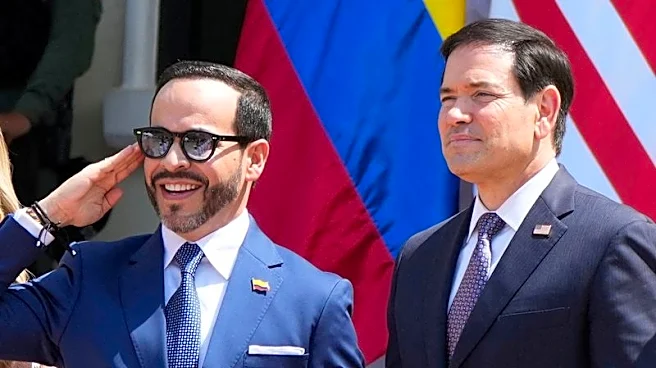
U.S. Representative Mario Diaz-Balart, co-chair of the Congressional Taiwan Caucus, has publicly congratulated Panama's National Assembly for establishing a new interparliamentary friendship group with Taiwan's legislature. This development marks a significant
step in renewed bilateral exchanges between Panama and Taiwan, which had ended formal diplomatic ties in June 2017. The Panamanian National Assembly officially formed this multiparty exchange group with Taiwan's Legislative Yuan during an inaugural ceremony. According to Taiwan's Ministry of Foreign Affairs (MOFA), 45 of Panama's 71 lawmakers, representing over 60 percent of the assembly, have joined the group. This initiative follows visits by more than 20 Panamanian lawmakers to Taiwan over the past six months, a rare occurrence since the severance of diplomatic relations. Foreign Minister Lin Chia-lung of Taiwan welcomed the move, emphasizing shared values of democracy, freedom, and human rights, and expressed hopes for deeper parliamentary diplomacy and expanded bilateral cooperation.
Why It's Important?
The formation of a Taiwan friendship group by Panama's National Assembly, and the public support from U.S. Representative Mario Diaz-Balart, carries significant implications for U.S. foreign policy and regional dynamics. The U.S. has consistently advocated for stronger unofficial ties between Taiwan and other nations, particularly in the face of increasing pressure from Beijing. Diaz-Balart's involvement underscores the U.S. Congress's commitment to supporting Taiwan's international space and counteracting China's diplomatic isolation efforts. This move could encourage other nations in Latin America and beyond to reconsider their engagement with Taiwan, potentially leading to a broader shift in diplomatic recognition or unofficial relations. For the U.S., it reinforces its strategic interests in the Indo-Pacific and its role as a guarantor of democratic values globally. The renewed engagement between Panama and Taiwan, even at an unofficial parliamentary level, could also open doors for increased trade, technological cooperation, and cultural exchanges, benefiting both parties and potentially influencing regional economic patterns.
What's Next?
Following the establishment of the Taiwan friendship group, the immediate next steps will likely involve the implementation of the parliamentary exchange platform. This could include further visits between Panamanian and Taiwanese lawmakers, discussions on potential areas of cooperation such as trade, technology, innovation, and agro-technology, and the transfer of knowledge. The U.S. Congress, particularly through the Congressional Taiwan Caucus, may continue to monitor and support these burgeoning ties, potentially offering legislative or diplomatic backing. However, this development is also likely to elicit a strong reaction from China, which adheres to the 'One China' principle and views any official or quasi-official engagement with Taiwan as a challenge to its sovereignty. Beijing may increase diplomatic pressure on Panama or other nations considering similar moves. The long-term impact will depend on the extent to which these parliamentary exchanges translate into more substantive cooperation and whether other countries follow Panama's lead in strengthening unofficial ties with Taiwan.
Beyond the Headlines
The establishment of the Taiwan friendship group in Panama, with the endorsement of U.S. Representative Mario Diaz-Balart, highlights a deeper geopolitical struggle for influence in Latin America. While Panama officially recognizes Beijing, this parliamentary initiative signals a potential divergence in foreign policy approaches within the Panamanian government, or at least a willingness among lawmakers to engage with Taiwan despite official diplomatic stances. This situation reflects the broader challenge faced by many nations in balancing economic ties with China against democratic values and relationships with the U.S. and its allies. The U.S. support for such initiatives is part of a larger strategy to counter China's growing influence in regions traditionally considered within the U.S. sphere of influence. Ethically, it raises questions about national sovereignty versus parliamentary autonomy in foreign relations. Culturally, increased exchanges could foster greater understanding and collaboration, potentially leading to long-term shifts in regional alliances and diplomatic norms.