


What's Happening?
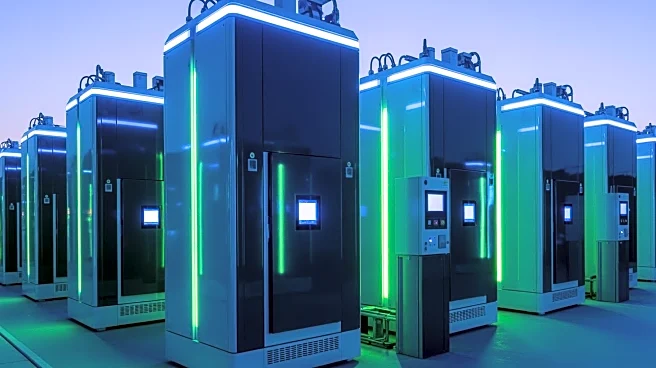
Massachusetts has initiated a significant energy storage project following the signing of a new law by Governor Maura Healey. The law mandates the installation of 5,000 megawatts (MW) of battery storage by 2030, with a recent tender calling for 1,500
MW. The tender specifies a minimum of four hours of energy storage duration, implying at least 5,072 megawatt-hours (MWh) of capacity. The law categorizes battery systems into three groups based on duration: 3,500 MW for 4-10 hours, 750 MW for 10-24 hours, and 750 MW for at least 24 hours. This initiative is part of a broader effort to enhance energy storage capabilities, with companies like Form Energy, which specializes in iron-air battery technology, potentially playing a key role.
Why It's Important?
The Massachusetts battery storage initiative is crucial for advancing renewable energy integration and grid reliability. By setting ambitious targets for energy storage, the state aims to reduce reliance on fossil fuels and enhance energy security. The inclusion of long-duration storage requirements indicates a shift towards more sustainable and resilient energy systems. This move could stimulate innovation in battery technologies, particularly those capable of providing extended storage durations, such as iron-air batteries. The project also positions Massachusetts as a leader in clean energy, potentially attracting investments and creating jobs in the renewable energy sector.
What's Next?
As the project progresses, stakeholders will likely focus on the development and deployment of suitable battery technologies to meet the law's requirements. Companies like Form Energy may expand their operations to fulfill the demand for long-duration storage solutions. The state will need to ensure regulatory and infrastructure support to facilitate the integration of these storage systems into the grid. Additionally, the success of this initiative could influence other states to adopt similar measures, promoting a nationwide shift towards enhanced energy storage capabilities.