




What's Happening?
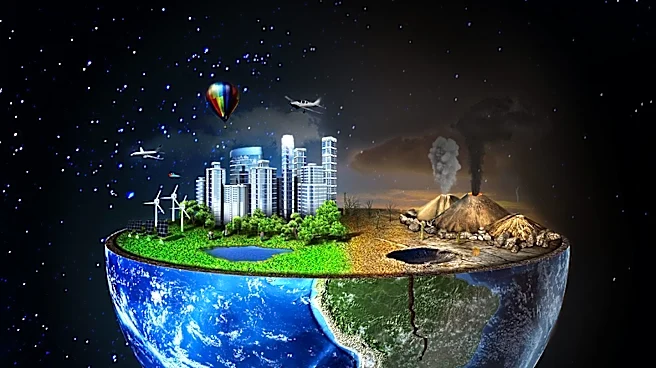
A new report detailed by the United Nations Environment Programme (UNEP) indicates that the world is on track to soon exceed the 1.5 degrees Celsius (2.7 degrees Fahrenheit) global warming limit established by the 2015 Paris Agreement. This agreement,
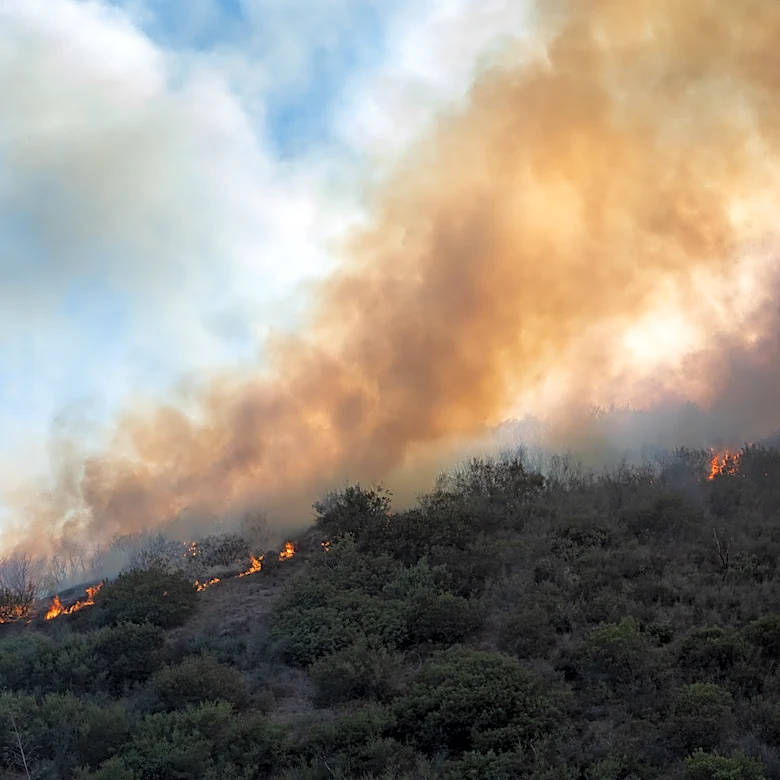
signed by 196 nations and territories, aimed to restrict the average rise of global temperatures to below 2 degrees Celsius above pre-industrial levels, with an ideal target of 1.5 degrees Celsius. U.N. Secretary-General António Guterres stated that recent extreme weather events, including scorching heat, wildfires, and floods, serve as a warning of future consequences. The report emphasizes the need to make any overshoot of the 1.5°C limit as small and short as possible, requiring an increase in ambition to address climate change. The primary drivers of climate change are human activities such as transportation, industrial manufacturing, and agriculture.
Why It's Important?
Exceeding the 1.5°C global warming threshold carries significant implications for the United States and the global community. The report highlights that continued warming will push climate risks and impacts to dangerous new heights, increasing the vulnerability of societies, communities, and economies. For the U.S., this could translate into more frequent and intense natural disasters, such as wildfires, hurricanes, and floods, impacting infrastructure, agriculture, and public health. Coastal regions, in particular, face heightened risks from rising sea levels and storm surges. The economic costs associated with these climate impacts, including disaster relief, rebuilding efforts, and disruptions to supply chains, could be substantial. Furthermore, the report underscores the urgency for the U.S. to accelerate its efforts in reducing greenhouse gas emissions and investing in adaptation strategies to protect its population and economy from the escalating effects of climate change.
What's Next?
The U.N. report outlines a pathway to address the impending exceedance of the 1.5°C limit, emphasizing two main areas of action: drastically reducing emissions and enabling adaptations to protect affected populations. This requires an immediate and sustained reduction in greenhouse gases like methane and carbon dioxide, with a long-term goal of achieving net-negative emissions through carbon capture technology. While carbon capture is still in early development, the U.N. stresses its essential role in future climate strategies. Additionally, the report calls for "adaptation actions" to support communities already experiencing the effects of climate change. Major stakeholders, including governments, businesses, and civil society groups, are expected to face increased pressure to implement more aggressive climate policies, invest in renewable energy, and develop resilient infrastructure to mitigate the impacts of a warming planet.
Beyond the Headlines
The potential breach of the 1.5°C target raises profound ethical and societal questions about intergenerational equity and global responsibility. The report implicitly challenges the current pace of climate action, suggesting that the world is not doing enough to protect future generations from severe environmental consequences. The emphasis on both emission reduction and adaptation highlights a shift in the climate discourse, acknowledging that some impacts are already unavoidable and requiring proactive measures to build resilience. This situation could trigger deeper discussions within the U.S. about the balance between economic growth and environmental protection, the role of technological innovation in addressing climate challenges, and the equitable distribution of resources for climate adaptation, particularly for vulnerable communities. The long-term shifts could include a re-evaluation of national energy policies and a greater integration of climate considerations into all sectors of the economy.