
What's Happening?
White House Chief of Staff Susie Wiles announced on Monday, March 16, 2026, that she has been diagnosed with early-stage breast cancer. Wiles stated that the cancer was detected early by her medical team,
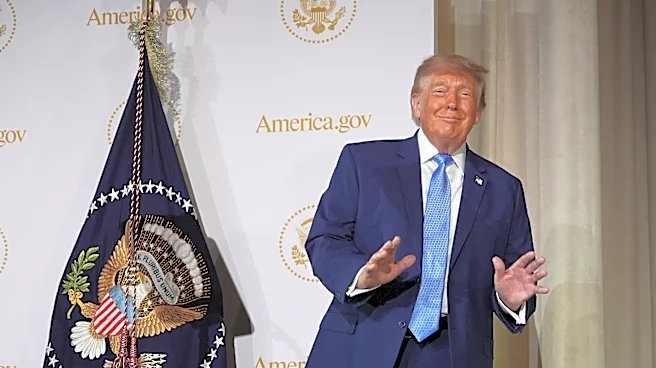
and she has a strong prognosis. She confirmed her intention to continue serving in her role as White House Chief of Staff while undergoing treatment. President Trump publicly acknowledged Wiles' diagnosis, praising her as an "amazing fighter" and expressing confidence in her recovery. He also noted that she would be spending "virtually full time at the White House" during her treatment. Wiles has served as President Trump's chief of staff since the beginning of his second term. The American Cancer Society estimates that approximately 321,910 females will be diagnosed with breast cancer in the U.S. this year.
Why It's Important?
The diagnosis of a high-ranking White House official like the Chief of Staff with a serious illness underscores the personal challenges faced by individuals in demanding public service roles. Susie Wiles' decision to continue her duties while undergoing cancer treatment highlights the dedication and resilience often required in such positions. Her public announcement could also serve to raise awareness about early detection of breast cancer, a disease that affects a significant number of women in the United States. The support expressed by President Trump for his chief of staff during this time reflects the close working relationships within the executive branch and the personal impact of health issues on political figures and their teams. This situation also brings to light the broader societal issue of balancing professional responsibilities with personal health crises, particularly in high-pressure environments.
What's Next?
Susie Wiles will begin her treatment for early-stage breast cancer immediately, as confirmed by President Trump. She plans to continue her duties as White House Chief of Staff throughout this period. While no specific details about her treatment plan or its duration have been publicly disclosed, President Trump indicated that her prognosis is "excellent, beyond excellent." Her continued presence in the White House suggests that there will be no immediate changes to the leadership structure within the President's top staff. The focus will likely remain on her recovery while she maintains her critical responsibilities in the administration. The situation may also prompt further public discussion about health and wellness among public servants.
Beyond the Headlines
Susie Wiles' public disclosure of her cancer diagnosis and her commitment to continue working could have broader implications for how public figures manage and communicate personal health challenges. It normalizes the experience of battling serious illness while maintaining professional responsibilities, potentially reducing stigma and encouraging others to prioritize early detection and treatment. Her decision to remain in her demanding role also highlights the intense pressures and expectations placed on senior government officials. This event could subtly influence workplace policies or support systems for employees facing similar health issues, particularly in high-stress environments. Furthermore, it serves as a reminder of the human element within the often-impersonal world of politics, showcasing the personal struggles that can occur behind the scenes of national governance.