





What's Happening?
In the early hours of March 18, 1990, two individuals disguised as Boston police officers gained entry to the Isabella Stewart Gardner Museum. They proceeded to tie up the guards and spent 81 minutes looting the galleries, making off with thirteen masterpieces.
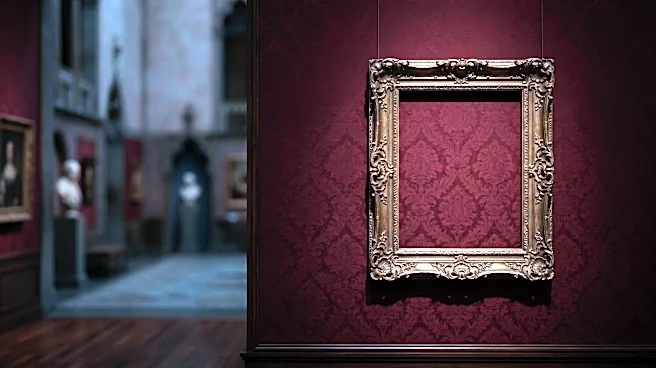
The stolen art is currently valued at over half a billion dollars. Despite an extensive investigation by the FBI and a substantial $10 million reward offered for information, none of the stolen artworks have been recovered. The FBI has indicated a high level of confidence that the heist was carried out by a Mafia crew operating out of Dorchester. However, the key suspects identified in connection with the crime were never formally charged, and all of them have since passed away. The museum continues to display empty frames in the precise locations where the paintings once hung, symbolizing the hope for their eventual return.
Why It's Important?
The Isabella Stewart Gardner Museum heist represents one of the largest unsolved art thefts in history, highlighting significant vulnerabilities in museum security and the enduring challenge of recovering stolen cultural artifacts. The inability to recover the artworks, despite a substantial reward and extensive law enforcement efforts, underscores the sophistication of organized crime in such operations and the difficulty in penetrating their networks. The continued absence of these masterpieces deprives the public of access to invaluable cultural heritage and leaves a permanent void in the museum's collection. This case also serves as a stark reminder of the long-term financial and cultural impact of such crimes, as the value of the stolen art continues to appreciate, further emphasizing the magnitude of the loss. The empty frames serve as a constant, poignant reminder of the theft, impacting the museum's narrative and visitor experience.
What's Next?
Given that the key suspects identified by the FBI have passed away and no new leads have emerged in decades, the likelihood of solving the Isabella Stewart Gardner Museum heist diminishes with each passing year. The museum's decision to keep the frames empty suggests a perpetual hope for the return of the art, but without new evidence or a confession, the case is likely to remain a cold case. Future developments would most likely hinge on an unexpected discovery of the artworks themselves, perhaps through an anonymous tip or a deathbed confession. However, the passage of time makes such an outcome increasingly improbable. The focus for the museum and law enforcement will likely remain on maintaining awareness of the stolen pieces in the art market and hoping for a breakthrough, however remote.
Beyond the Headlines
The Isabella Stewart Gardner Museum heist transcends a simple criminal act, delving into deeper implications concerning the ethics of art ownership, the challenges of cultural preservation, and the psychological impact of unresolved mysteries. The decision to leave the frames empty is a powerful statement, transforming absence into a form of presence and inviting contemplation on loss and memory. This act also raises questions about the role of museums in safeguarding heritage and the balance between accessibility and security. Furthermore, the enduring public fascination with the case reflects a broader human inclination towards unsolved puzzles and the allure of high-stakes crime. The heist has become a cultural touchstone, influencing narratives in true crime and art history, and serving as a cautionary tale about the vulnerability of even the most protected treasures.