





What's Happening?
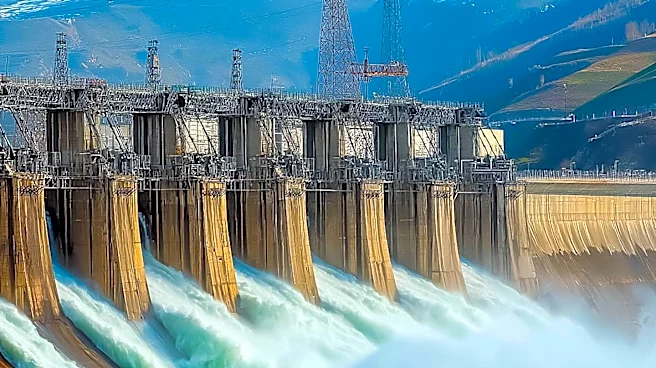
Hydropower facilities are increasingly upgrading their governor systems from traditional mechanical-hydraulic designs to advanced digital platforms. This modernization aims to improve the precision of turbine load regulation and enhance the flexibility
and reliability of power plants within the modern electricity grid. Digital governors utilize electronic controllers and high-resolution sensors, replacing older mechanical components like flyweights and dashpots. This allows for the implementation of complex control algorithms, such as proportional-integral-derivative (PID) logic, which can be finely tuned to the specific hydraulic characteristics of each plant. These advanced systems enable hydropower plants to provide essential grid services, including primary frequency response and secondary load following, by rapidly responding to grid disturbances and maintaining the mechanical stability of the turbine generator set. The integration of high-speed data processing and precision hydraulic actuators ensures assets respond quickly to changes in demand. This digital transformation also facilitates the integration of plants into broader regional grid management schemes through standardized communication protocols, providing an additional layer of stability for the transmission network.
Why It's Important?
The upgrade of hydropower governor systems is crucial for maintaining grid stability as the energy mix evolves with an increasing proportion of intermittent renewable sources. Modern digital governors provide precise frequency support, which is essential for stabilizing grid frequency following the loss of a large generator or load. They can implement virtual inertia and fast frequency response modes, increasingly required in grids with lower physical inertia. This proactive approach to load regulation, enabled by feed-forward control strategies and real-time data from grid operators, allows for more efficient and reliable power delivery. The enhanced precision and responsiveness of these systems ensure that hydropower remains a vital component of grid stability. Furthermore, the wealth of diagnostic data provided by digital governors supports predictive maintenance and performance optimization, allowing operators to identify potential issues early and make informed investment decisions, ultimately contributing to lower operational losses and improved asset utilization.
What's Next?
The trend towards digital intelligence and AI-based performance analysis is expected to continue, becoming crucial for managing large, geographically distributed renewable portfolios. Hydropower facilities will likely further integrate advanced algorithms and high-performance hydraulics to achieve even greater precision in power generation. The ongoing refinement of stability models will be a fundamental component of technical progress in the hydropower industry, ensuring that control systems are both agile and secure while managing hydraulic transients like the water hammer effect. Utilities are prioritizing the modernization of their governor fleets, recognizing the multifaceted value proposition of these technologies, which includes improved load regulation, enhanced safety through rapid shutdown capabilities, and better asset management. This commitment to innovation will ensure hydropower's competitiveness and reliability in supporting a sustainable and resilient energy future.
Beyond the Headlines
The shift to digital hydropower governor systems represents a broader paradigm change in the energy sector, moving towards intelligent, automated, and interconnected power generation. This evolution highlights the increasing reliance on data-driven decision-making and advanced computational power to optimize physical infrastructure. The ethical implications include ensuring the security of these interconnected systems against cyber threats, as a compromise could have widespread grid stability consequences. Culturally, it signifies a move away from traditional, hands-on operational models towards a more automated and remote management approach, requiring new skill sets for the workforce. Legally, it may necessitate updated regulatory frameworks to accommodate the capabilities and complexities of these advanced systems, particularly concerning grid services and market participation. The long-term shift points towards a highly flexible and resilient energy infrastructure capable of adapting to dynamic demand and supply conditions, with hydropower playing a critical role as a primary stabilizer.