




What's Happening?
Washington State has reported its initial confirmed cases of H5N1 bird flu in dairy cattle, leading to the quarantine of two farms in Yakima County. This development follows federal laboratory confirmation of the virus, as announced by the Washington State Department
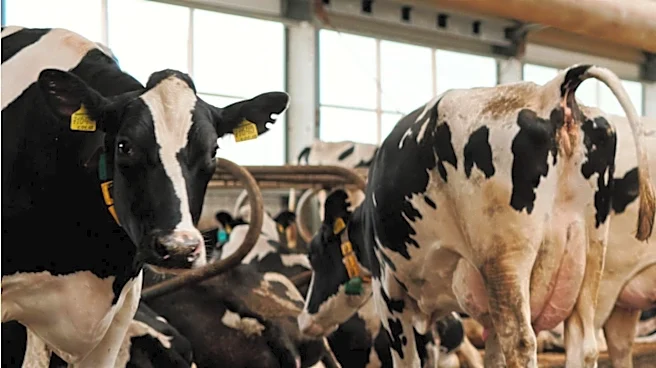
of Agriculture. The detection marks the end of a two-year period during which over 7,000 surveillance tests for the virus in the state yielded negative results. Since March 2024, dairy cattle in 19 states have been affected by the national outbreak. While the immediate risk to most households is considered low and pasteurized milk remains safe, concerns are heightened for farmworkers, dairy families, veterinarians, and individuals consuming raw milk or feeding it to pets. Both affected farms are under quarantine and have implemented stringent biosecurity measures, with state staff conducting investigations and additional testing. Veterinarians are providing care to sick cows, most of whom are expected to recover within approximately six weeks. The department has not specified how the virus entered these herds but noted that while wild birds can carry the virus, they are not considered the primary source of spread between dairy herds; instead, infected animals, contaminated milk, equipment, vehicles, or people moving between farms are the main transmission routes.
Why It's Important?
The confirmation of H5N1 in Washington's dairy cattle is significant as it extends the national outbreak to a major Pacific Northwest dairy state, adding to the more than 1,166 dairy herds affected across 19 states since March 2024. This expansion underscores the persistent challenge of containing the virus within agricultural sectors. The primary concern shifts to those in direct contact with infected animals, such as farmworkers and veterinarians, who face the highest risk of exposure. Although human infections remain uncommon, with the CDC listing 71 human H5 cases in the U.S. since 2024 and assessing the public health risk as low, continuous monitoring of animal populations and human health is crucial. The emphasis on the safety of pasteurized milk reassures consumers, but the warning against raw milk consumption highlights a specific public health risk, as infected cows can shed the virus in their milk. The economic impact on quarantined farms, including potential production losses and increased operational costs due to biosecurity measures, could be substantial, affecting local dairy economies.
What's Next?
Following the confirmed cases, Washington State officials will continue on-farm investigations and additional testing to determine the extent of the outbreak within Yakima County and potentially other areas. The Department of Agriculture plans to issue news releases for each newly affected county, with subsequent detections in already announced counties posted online. Dairy producers are urged to enhance biosecurity measures, closely monitor their herds for symptoms such as thicker milk, reduced production, fever, and respiratory signs, and report any signs of illness immediately. The agency recommends isolating newly arriving animals for 30 days, keeping milk from sick cows separate, and avoiding shared equipment or workers between farms to prevent further spread. Public health advisories will likely continue to emphasize the safety of pasteurized milk while cautioning against raw milk consumption and advising protective measures for those in close contact with livestock. The focus will remain on containing the virus within animal populations and preventing human transmission, with ongoing surveillance by state and federal agricultural and health authorities.
Beyond the Headlines
The emergence of H5N1 in Washington's dairy cattle highlights broader implications for agricultural biosecurity and public health preparedness. The virus's ability to spread across multiple states and animal populations, despite extensive surveillance, points to the complex challenges of managing zoonotic diseases in interconnected agricultural systems. This situation could prompt a re-evaluation of existing biosecurity protocols on dairy farms and potentially lead to new regulations or enhanced funding for disease prevention and rapid response. The distinction between the safety of pasteurized versus raw milk also brings to light ongoing debates about food safety practices and consumer choices, potentially influencing public perception and demand for raw dairy products. Furthermore, the continuous monitoring of H5N1 in livestock serves as a critical early warning system for potential viral evolution that could increase transmissibility to humans, underscoring the importance of a 'One Health' approach that integrates human, animal, and environmental health surveillance to mitigate future pandemic risks.