







What's Happening?
Rumors circulating on social media platforms, particularly X (formerly Twitter), falsely claimed the death of R&B singer R. Kelly. These claims gained significant traction, with one post attracting approximately 2.4 million views. However, fact checks,
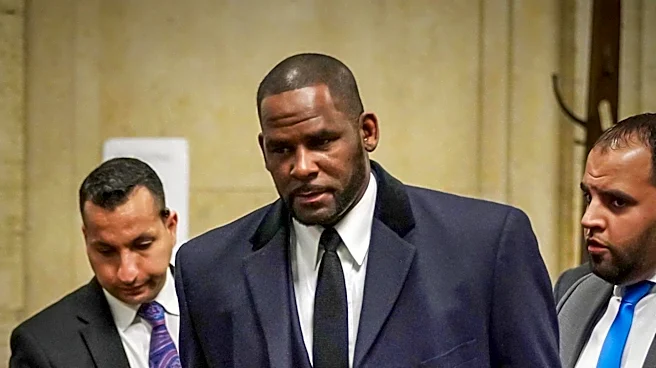
including one published by Hindustan Times on October 29, 2026, have debunked these rumors, confirming that R. Kelly, whose legal name is Robert Sylvester Kelly, is alive and serving his federal prison sentence. The false report originated from a self-identified parody and satire account on X. An artificial intelligence chatbot, Grok, also rejected the rumor, stating that no credible sources had reported his death. R. Kelly is currently incarcerated at the Federal Correctional Institution in Butner, North Carolina, serving a combined 31-year sentence for federal convictions.
Why It's Important?
The rapid spread of unverified information, such as the false death rumors concerning R. Kelly, highlights a significant challenge in the digital age: the proliferation of misinformation and disinformation. This incident underscores how easily parody or satire accounts can be misinterpreted as legitimate news sources, leading to widespread confusion and public concern. For individuals, it emphasizes the importance of critically evaluating online content and relying on established news organizations and official updates for accurate information. For social media platforms, it brings to light the ongoing struggle to manage and mitigate the impact of false narratives, even from accounts labeled as parody. The incident also reflects a broader societal issue where sensationalized or unverified claims can quickly overshadow factual reporting, impacting public perception and trust in information sources.
What's Next?
In the immediate future, social media users and the public are encouraged to exercise caution and verify information from multiple credible sources before sharing. Platforms like X may face continued scrutiny regarding their content moderation policies and their effectiveness in preventing the viral spread of false information, even from accounts designated as parody. For R. Kelly, his legal team may continue to pursue avenues for relief, such as the clemency request reportedly made to President Trump in July 2026, though the outcome of such efforts remains uncertain. The broader conversation around celebrity death hoaxes and the responsibility of online users and platforms in combating misinformation is likely to persist, prompting ongoing discussions about digital literacy and media consumption habits.
Beyond the Headlines
This incident delves deeper into the ethical implications of online content creation and consumption. The use of parody accounts, while often intended for humor or satire, can have unintended consequences when their content is taken seriously by a wide audience, leading to emotional distress for fans and potentially impacting the subject of the hoax. It also raises questions about the psychological impact of such rumors on the public, who may experience a sense of betrayal or confusion when confronted with conflicting information. Furthermore, the event highlights the evolving role of AI chatbots in fact-checking and information dissemination, showcasing their potential to either combat or inadvertently contribute to the spread of misinformation depending on their programming and the sources they access. The incident serves as a stark reminder of the need for greater digital literacy and critical thinking skills in an increasingly interconnected and information-saturated world.