







What's Happening?
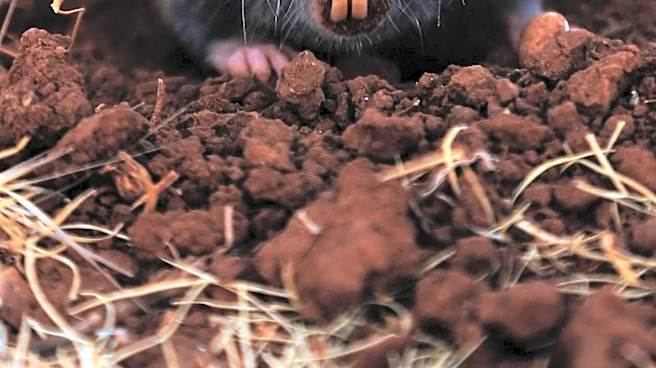
A recent study published in Frontiers in Aging investigated whether the ubiquitous expression of the naked mole-rat hyaluronan synthase 2 (nmrHas2) transgene could attenuate age-related hearing loss (AHL) in C57BL/6 mice. Despite previous findings that
this genetic intervention improved healthspan, reduced inflammaging, and extended the lifespan of these mice, the study found no evidence that nmrHas2 attenuated AHL. Auditory brainstem response (ABR) testing showed significant hearing loss in both nmrHas2-expressing mice and control mice as they aged from 3 to 12 months. The ABR thresholds were significantly different based on age but not on genotype, indicating that the nmrHas2 transgene did not prevent or reduce age-related hearing decline. This outcome contrasts with the effects of calorie restriction, which has been shown to prevent AHL in mice, suggesting distinct mechanisms of action for these two interventions.
Why It's Important?
This research is significant for the U.S. scientific community and those interested in aging research, particularly in understanding the complexities of age-related conditions. The finding that a gene known to confer broad health and longevity benefits in mice does not prevent age-related hearing loss highlights that aging is a multi-faceted process with distinct pathways for different physiological systems. It suggests that interventions targeting one aspect of aging may not universally apply to all age-related conditions. For researchers, this study provides crucial insights into the specific mechanisms underlying AHL and the limitations of certain anti-aging strategies. It also underscores the importance of investigating diverse approaches to combat various aspects of aging. For the public, it tempers expectations about 'miracle' anti-aging solutions, emphasizing that even promising genetic interventions may have specific rather than universal effects on healthspan.
What's Next?
Future research will likely focus on understanding why nmrHas2 expression did not attenuate AHL, despite its presence in the cochlea. One potential area of investigation is whether the transgene generated sufficient very high molecular mass hyaluronan (vHMM-HA) in the cochlea, or if the high hyaluronidase activity in mouse tissues degraded it too quickly. Researchers may also explore alternative mouse strains where AHL is caused by different mechanisms, such as inflammation-induced aging, to see if vHMM-HA could be effective in those contexts. Further studies could also investigate whether vHMM-HA can mitigate hearing loss caused by exogenous factors like noise or drug damage, or oxidative stress from cigarette smoke exposure. The study also suggests a need to determine the regulation of the NRF2 pathway in the cochlea from vHMM-HA expression and to examine cochlear cell-type specific HA-interactions, particularly given that CD44, a primary receptor for HA, is expressed only in outer pillar cells and not outer hair cells.
Beyond the Headlines
This study contributes to a deeper understanding of the intricate biological processes of aging and the challenges in developing comprehensive anti-aging therapies. It highlights the concept of 'decoupled' aging outcomes, where improvements in one aspect of healthspan (like overall longevity) do not necessarily translate to others (like hearing). This complexity suggests that a holistic approach to healthy aging may require multiple, targeted interventions rather than a single 'cure.' The research also implicitly raises questions about the evolutionary trade-offs in biological systems, where certain protective mechanisms might be highly specialized. From a broader scientific perspective, it reinforces the idea that while model organisms like mice provide valuable insights, direct translation of findings to humans requires careful consideration due to species-specific biological differences and environmental factors. The study encourages a more granular and systems-level approach to aging research, moving beyond generalized anti-aging strategies to understand and address the specific vulnerabilities of different organs and tissues.