






What's Happening?
Congresswoman Laurel Lee (R-Fla.) has introduced the 'Ballots by Election Day Act,' a companion bill to Senator Ashley Moody’s (R-Fla.) earlier legislation. This bill aims to amend the 'Help America Vote Act of 2002' by requiring all federal election
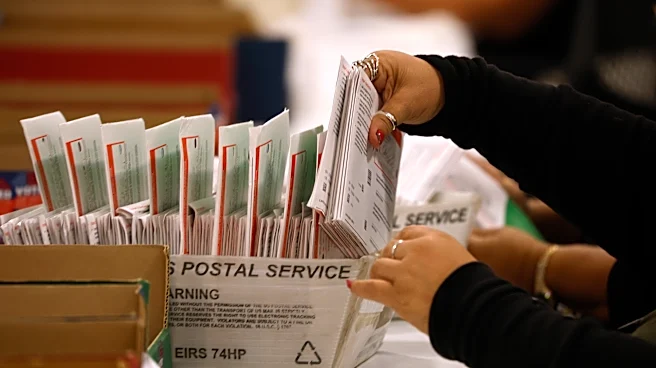
ballots, including absentee and mail-in ballots, to be received by the appropriate election official by the end of Election Day. The proposed legislation would prohibit states from accepting any ballots after this deadline, with the sole exception of ballots cast by absent uniformed services voters or overseas voters. The bill's provisions are intended to apply to federal elections held in 2027 and beyond. Congresswoman Lee emphasized that Florida has successfully implemented similar measures for many years, ensuring organized elections and timely results without denying any voter the right to vote. She clarified that the bill does not limit mail-in voting but rather establishes a clear deadline for ballot receipt.
Why It's Important?
This legislation holds significant implications for U.S. election integrity and administration. By mandating that all ballots be received by Election Day, the bill seeks to standardize election timelines across states, potentially reducing the period of uncertainty following elections and accelerating the certification of results. This aligns with concerns about election security and efficiency, particularly in the wake of recent election cycles that saw extended ballot counting periods. For voters, it would necessitate a clear understanding of deadlines and potentially earlier submission of mail-in ballots. For election officials, it could streamline post-election processes but might also require adjustments to existing state laws and voter education campaigns. The bill's alignment with President Trump's March 2025 Executive Order on 'Preserving and Protecting the Integrity of American Elections' underscores a broader political movement to tighten election rules and enhance perceived security, which could be viewed differently by various political factions and civil society groups.
What's Next?
The 'Ballots by Election Day Act' will now proceed through the legislative process, requiring committee review, potential amendments, and votes in both the House and Senate. Its passage would depend on gaining sufficient bipartisan support, which could be challenging given the contentious nature of election reform. If enacted, states would need to adapt their election laws and procedures to comply with the new federal mandate, potentially leading to legal challenges from states or advocacy groups that believe the law infringes on voting rights or state autonomy in election administration. Election officials would also need to launch extensive public awareness campaigns to inform voters of the new deadlines. The bill's effective date of 2027 and onward provides a window for states to prepare for these changes. The debate surrounding this bill will likely involve discussions about voter access, election security, and the balance of power between federal and state governments in overseeing elections.
Beyond the Headlines
Beyond the immediate procedural changes, this bill touches upon deeper philosophical debates about the nature of democratic participation and the balance between accessibility and security in elections. Proponents argue that clear, consistent deadlines enhance public confidence in election outcomes and prevent prolonged disputes. Opponents may contend that strict receipt deadlines could disenfranchise voters, particularly those who face logistical challenges or rely on last-minute ballot submission. The emphasis on Election Day receipt reflects a desire to return to more traditional election models, potentially signaling a shift away from expanded mail-in voting practices adopted during recent events. This legislative effort also highlights the ongoing influence of past presidential administrations' executive orders on current legislative agendas, demonstrating how policy priorities can persist and evolve into formal law. The long-term implications could include a re-evaluation of voting methods and a renewed focus on in-person voting or early in-person voting options to ensure timely ballot submission.