


What's Happening?
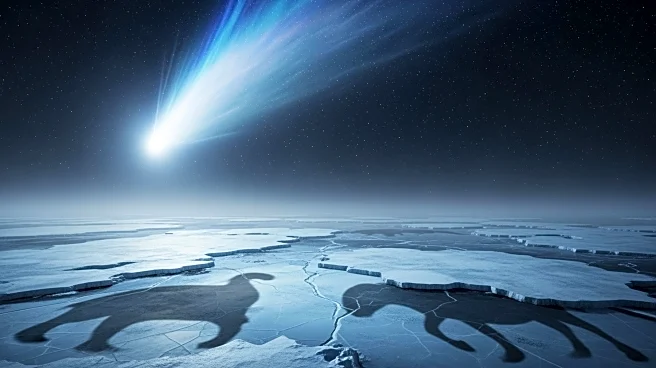
Researchers, led by UC Santa Barbara Emeritus Professor of Earth Science James Kennett, have presented new evidence supporting the hypothesis that a fragmented comet exploded in Earth's atmosphere nearly 13,000 years ago. This event is believed to have contributed
to the sudden extinction of mammoths, mastodons, and other large Ice Age animals, as well as the disappearance of the Clovis culture in North America. The study, published in PLOS One, highlights findings from three Clovis archaeological sites: Murray Springs in Arizona, Blackwater Draw in New Mexico, and Arlington Canyon in California's Channel Islands. At these sites, the team discovered shocked quartz, which are sand grains altered by extreme heat and pressure, indicating a cosmic impact. This event coincides with the onset of the Younger Dryas, a period marked by a sudden return to near ice-age conditions.
Why It's Important?
The findings have significant implications for understanding the causes of the Younger Dryas, a period that interrupted the warming trend following the Last Glacial Period. The hypothesis suggests that the comet explosion released immense heat and shockwaves, igniting widespread fires and creating an 'impact winter' by filling the atmosphere with smoke and soot. This environmental catastrophe likely contributed to the extinction of large animals and disrupted human populations across North and South America. The study adds to the growing body of evidence supporting the Younger Dryas impact hypothesis, which includes the discovery of a dark, carbon-rich 'black mat' layer in sediments and elevated levels of rare elements associated with comets.
What's Next?
Further research is expected to focus on gathering more evidence to support the impact hypothesis, particularly through advanced analytical technologies that can identify impact proxies like nanodiamonds and metallic spherules. Scientists may also continue to explore the absence of a large crater, as the event is believed to have been a 'touchdown airburst' that caused significant damage without leaving a lasting crater. This research could lead to a better understanding of how such cosmic events have shaped Earth's history and influenced the evolution of life.
Beyond the Headlines
The study raises questions about the vulnerability of Earth's ecosystems to cosmic events and the potential for similar occurrences in the future. It also highlights the importance of interdisciplinary research in uncovering the complex interactions between cosmic impacts, climate change, and biological extinctions. The findings may prompt further exploration into the role of cosmic events in shaping human history and the development of ancient cultures.