






What's Happening?
A video purportedly showing the impact of a 7.0-magnitude earthquake in Tibet on October 22, 2026, has been widely circulated on social media platforms, including X. However, AFP has confirmed that the footage is unrelated to the Tibet earthquake. The
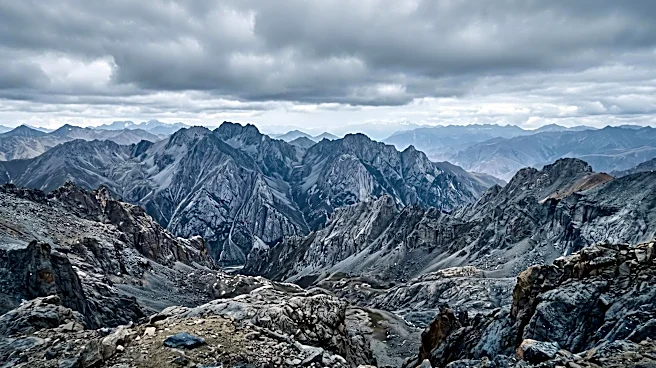
video, which depicts people fleeing a violently shaking building with debris falling, has been circulating for months and actually shows the aftermath of a 7.4-magnitude earthquake that struck Colombia in August 2026. This misattribution occurred despite the Tibet earthquake killing at least 16 people and media outlets, including Hong Kong-based The Standard and Chinese-language Sing Tao Headline, also using the incorrect footage in their reports. The actual epicenter of the Tibet quake was in a mountainous area about 190 kilometers east-northeast of Nagqu.
Why It's Important?
The spread of misinformation, particularly during natural disasters, can have significant consequences. False footage can cause unnecessary panic, divert attention and resources from actual affected areas, and erode public trust in news sources. In an era where information travels rapidly through social media, the ability to quickly and accurately verify content is crucial for both individuals and media organizations. This incident highlights the ongoing challenge of combating disinformation and the importance of critical evaluation of shared content, especially in high-stakes situations like natural calamities where accurate information is vital for safety and relief efforts. The misrepresentation of events can also impact international perceptions and aid responses.
What's Next?
Fact-checking organizations and social media platforms will likely continue their efforts to identify and flag misleading content, especially during breaking news events. Users are encouraged to exercise caution and verify information from multiple reputable sources before sharing. Media outlets that inadvertently used the false footage may issue corrections or clarifications to maintain their credibility. The incident serves as a reminder for both content creators and consumers to be vigilant against the spread of unverified information, particularly when it pertains to sensitive events like natural disasters. Ongoing education on media literacy and critical thinking skills will be essential to mitigate the impact of such misinformation.
Beyond the Headlines
This event underscores a broader societal challenge: the ease with which visual content can be decontextualized and repurposed to create false narratives. The emotional impact of disaster footage makes it particularly susceptible to viral spread, often overriding rational assessment. This phenomenon raises ethical questions for social media companies regarding their responsibility in curating content and for users in their role as disseminators of information. The incident also points to the need for robust digital forensics and verification tools to quickly ascertain the authenticity and origin of visual media, especially as deepfake technologies become more sophisticated. The cultural implications include a growing skepticism towards online information, necessitating a renewed emphasis on journalistic integrity and transparent reporting.