








What's Happening?
Retired Minnesota Department of Natural Resources forester Gary Anderson recently led a woodland walk on his nearly 40-acre property near Outing, Minnesota, demonstrating the benefits of active forest management. For 50 years, Anderson has meticulously
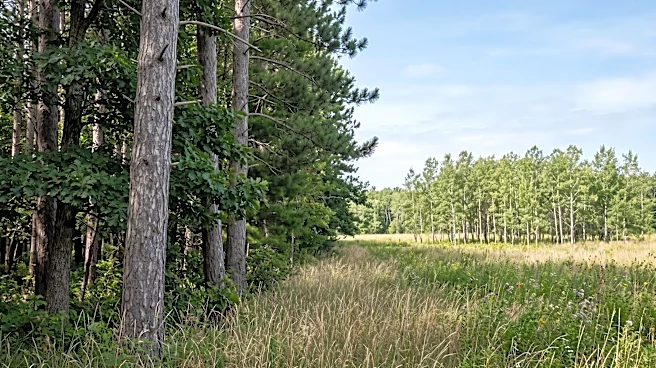
managed his land, resulting in six distinct microecosystems, including marsh habitat, open areas with upland grasses, red and white oak, white pine, and two age classes of aspens. This diverse landscape supports a variety of wildlife, such as wood ducks and golden-winged warblers, which require different habitat stages for their life cycles. The event, organized by the Cass County Soil and Water Conservation District (SWCD), aimed to educate local residents on forest stewardship and highlight the resources available for private landowners to manage their woodlands effectively. Anderson's property serves as a living example of how intentional management can enhance biodiversity and forest health.
Why It's Important?
This initiative is important because it provides a tangible model for private landowners across the U.S. to engage in active forest management, which is crucial for maintaining ecological balance and mitigating environmental risks. The event underscores that while leaving forests untouched might seem appealing, a lack of management can lead to habitat degradation and increased vulnerability to issues like drought and disease. By showcasing Anderson's successful, long-term approach, the Cass County SWCD is empowering individuals to contribute to broader conservation efforts. The availability of expert guidance and financial support from organizations like the SWCD can help overcome barriers for landowners, promoting practices that not only benefit wildlife and forest health but also contribute to cleaner water systems. This localized effort has the potential to inspire similar initiatives, fostering a more proactive and informed approach to land stewardship nationwide.
What's Next?
The Cass County Soil and Water Conservation District plans to continue offering woodland walks and providing resources to help residents manage their forests. Landowners like Diane and Chris Blake, who attended Anderson's tour, are now motivated to consult with their local SWCD to develop management plans for their properties, including potential projects like pond dredging and trail development. Anderson himself intends to place his land in a conservation easement to ensure its continued protection and management for future generations. This ongoing engagement and the availability of support from conservation districts suggest a growing trend towards active, informed forest stewardship among private landowners. The success of these local initiatives could serve as a blueprint for other regions, encouraging more individuals to adopt sustainable forest management practices and contribute to the overall health of U.S. ecosystems.
Beyond the Headlines
Gary Anderson's 50-year dedication to managing his woodland highlights a profound shift in conservation philosophy, moving beyond passive preservation to embrace active stewardship. This approach recognizes that human intervention, when guided by ecological principles, can enhance biodiversity and create more resilient ecosystems. The story also subtly touches upon the impact of climate change, as evidenced by Anderson's 'Donut Pond' drying up due to drought, underscoring the urgency of adaptive management strategies. Furthermore, the intergenerational aspect of Anderson's work—his desire to leave a legacy through a conservation easement—speaks to a deeper ethical commitment to the land. This model of informed, long-term engagement by private citizens, supported by local conservation organizations, represents a powerful, decentralized approach to environmental health that complements larger-scale government and non-profit efforts, fostering a culture of responsibility and connection to natural resources.