







What's Happening?
William Howard Taft, the 27th U.S. president, is being re-examined for his complex political identity, which blended both progressive and conservative ideals throughout his extensive public service career. Taft's tenure as president, from 1909 to 1913,
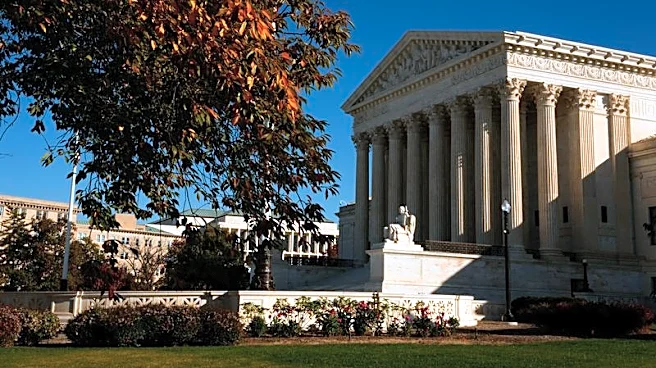
was only a fraction of his contributions, which included roles as U.S. solicitor general, federal judge, governor-general of the Philippines, and secretary of war. After his presidency, he achieved his lifelong ambition by becoming Chief Justice of the Supreme Court in 1921, serving until his death in 1930. Despite being often viewed as a conservative foil to progressive figures like Theodore Roosevelt, Taft supported many progressive goals, such as civil service reform, lower tariffs, stronger financial regulations, anti-monopoly legislation, higher taxes on the wealthy, and women's suffrage. His administration vigorously pursued antitrust suits against major corporations like Standard Oil and U.S. Steel, and he championed the Sixteenth Amendment, which established the federal income tax.
Why It's Important?
Understanding William Howard Taft's multifaceted political identity is important because it challenges simplistic categorizations of historical figures and political movements. His blend of progressive policies with conservative principles demonstrates that political ideologies were more fluid in the early 20th century than they often appear today. This historical perspective can inform contemporary political discourse by illustrating that effective governance can emerge from a synthesis of different approaches rather than strict adherence to one doctrine. Taft's actions, such as his robust antitrust enforcement and support for the income tax, had lasting impacts on U.S. economic policy and the regulatory landscape, shaping the relationship between government and big business. His career also highlights the evolution of the progressive movement and the internal debates within it, particularly his concerns about judicial overreach and the rule of law. For political scientists and historians, Taft's legacy offers a rich case study in presidential leadership and judicial philosophy, demonstrating how individuals can navigate and influence significant societal transformations.
What's Next?
While William Howard Taft's historical period has passed, the ongoing re-evaluation of his legacy by historians and biographers will continue to shape public understanding of the Progressive Era and early 20th-century American politics. Future scholarship may further explore the nuances of his judicial philosophy as Chief Justice, particularly how his conservative respect for the rule of law intersected with his earlier progressive leanings. The examination of Taft's approach to governance, which prioritized working within existing institutions to improve society, could serve as a model for contemporary political leaders seeking to bridge ideological divides. Debates about the balance between governmental regulation and free markets, and the role of the judiciary in a democratic society, continue to resonate, making Taft's historical contributions relevant for ongoing discussions about U.S. public policy and constitutional interpretation. His story will likely remain a subject of academic interest, contributing to a more comprehensive understanding of American political development.
Beyond the Headlines
Beyond the immediate historical facts, Taft's career offers deeper insights into the nature of political identity and public service. His willingness to embrace policies typically associated with progressivism while maintaining a fundamental respect for established institutions and the rule of law suggests a pragmatic approach to governance that transcends rigid ideological boundaries. This nuanced stance highlights the ethical dimension of leadership, where the pursuit of public benefit can sometimes necessitate adopting diverse policy tools. Legally, his journey from solicitor general to president and then Chief Justice underscores the interconnectedness of the executive, legislative, and judicial branches, and how experience in one can inform the others. Culturally, Taft's story reminds us that historical figures are often more complex than their popular caricatures, challenging us to look beyond superficial labels to understand their true impact and motivations. His emphasis on incremental improvement rather than radical change also speaks to a particular philosophy of societal progress, one that values stability and careful reform.