


What's Happening?
The Permanent Mission of China to the United Nations and Other International Organizations in Vienna recently hosted an event to mark the 55th anniversary of the restoration of the People's Republic of China's lawful seat in the UN. The event, chaired
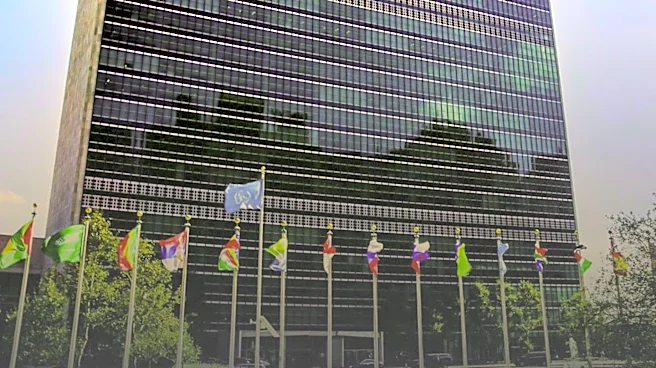
by Li Song, China's permanent representative to the UN in Vienna, reflected on China's contributions and reaffirmed its commitment to the international body. Dignitaries including UN Office at Vienna Director-General Monica Juma, International Atomic Energy Agency (IAEA) Director General Rafael Grossi, and United Nations Industrial Development Organization (UNIDO) Director General Gerd Mueller attended. Li emphasized China's peaceful development and its contributions to humanity's well-being over the past 55 years, highlighting its unwavering commitment to upholding the UN's role in peace and development. Juma noted that China's seat restoration significantly enhanced the voice of developing countries and strengthened the UN's universal representativeness, aligning with the UN Charter's principles. Grossi described UN General Assembly Resolution 2758 as a milestone that filled an important gap in the UN system.
Why It's Important?
This commemoration underscores China's long-standing engagement with the United Nations and its continued emphasis on multilateralism. For the U.S. and the international community, China's reaffirmed commitment to the UN signals its intent to remain a significant player in global governance and international cooperation. The event highlighted China's role in enhancing the voice of developing countries, a perspective that often contrasts with the interests of developed nations, including the U.S., within UN frameworks. The participation of heads of major international organizations like the IAEA and UNIDO indicates the broad recognition of China's influence and its potential to contribute to global initiatives, from nuclear non-proliferation to industrial development and poverty reduction. This ongoing engagement shapes the dynamics of international relations and can influence global policy discussions on various critical issues.
What's Next?
China has expressed its readiness to collaborate with all parties to leverage Vienna's multilateral platform to support, revitalize, and strengthen the UN, aiming to advance the building of a community with a shared future for humanity. This suggests a continued proactive role for China within the UN system, potentially leading to increased Chinese leadership or influence in various UN-led initiatives. The emphasis on upholding multilateralism and advancing the UN's development indicates that China will likely continue to advocate for reforms that reflect a more equitable global representation, particularly for developing nations. Future interactions within the UN will likely see China championing its vision of global governance, potentially impacting discussions on international peace, security, and development, and influencing the direction of UN policies and programs.
Beyond the Headlines
The 55th anniversary celebration also serves as a powerful reminder of the historical shift in global power dynamics that occurred with China's entry into the UN. The event's focus on Resolution 2758, which restored China's lawful seat, highlights a pivotal moment that reshaped the UN's legitimacy and representativeness. This historical context is crucial for understanding contemporary debates about UN Security Council reform, where the imbalance of power and representation remains a contentious issue. China's consistent advocacy for developing countries' voices within the UN framework reflects a broader geopolitical strategy to foster a multipolar world order. This long-term vision has implications for the U.S., as it challenges traditional Western-centric international institutions and promotes alternative models of global cooperation and governance.