







What's Happening?
A new vacancy has been announced under New York State Military Law for a Training Officer/Assistant Chief of Training. This position, which is management confidential and not covered by labor contracts, is responsible for planning, developing, implementing,
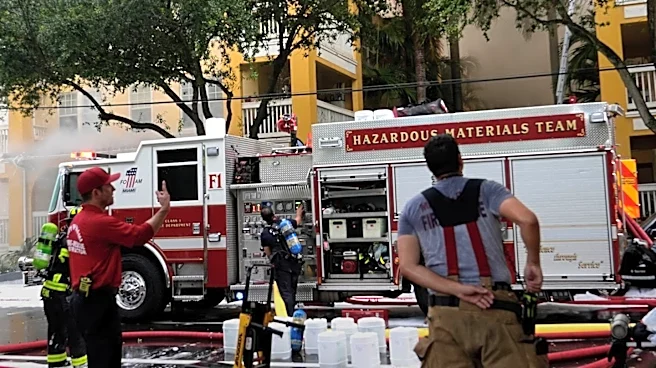
and evaluating comprehensive fire prevention training, safety, and hazardous material handling programs at Air National Guard Bases within New York State. The Training Officer will manage training programs for all fire department personnel, including military members, ensuring compliance with federal and state regulations, National Guard Bureau (NGB), and Air Force instructions. The role also involves performing duties of an Airport Firefighter 1 and 2, and potentially acting as an Airport Firefighter 3 or Fire Prevention Officer during absences. Key responsibilities include assessing program objectives, assisting in budget preparation, managing the DOD Firefighter Certification Program, and overseeing the development of lesson plans for recurring proficiency training. The position requires extensive certifications, including Fire Officer III, Fire Instructor III, Fire Inspector II, and HAZMAT Incident Commander, along with a minimum of five years of experience as a full-time Airport Firefighter.
Why It's Important?
This position is crucial for maintaining high standards of fire safety and emergency response capabilities within New York's Air National Guard Bases, directly impacting the safety of military personnel and state assets. The requirement for extensive certifications and experience underscores the critical nature of the role, ensuring that fire protection and prevention personnel are highly trained and compliant with rigorous federal and state standards. The management confidential status of the position highlights its strategic importance in military operations, allowing for direct oversight and implementation of critical training programs without the complexities of labor contract provisions. The role's focus on hazardous material handling and various firefighting techniques, including structural and aircraft firefighting, is vital for protecting both human life and valuable military infrastructure from diverse threats. The emphasis on continuous training and evaluation ensures that emergency responders are prepared for evolving challenges, contributing to overall national security and disaster preparedness.
What's Next?
The New York State Military Law will proceed with the hiring process to fill this critical Training Officer/Assistant Chief of Training position. Candidates will need to demonstrate their extensive certifications, including DOD certifications such as Fire Officer III, Fire Instructor III, Fire Inspector II, and HAZMAT Incident Commander, or equivalent accreditation. They must also possess a minimum of five years of experience as a permanent, full-time Airport Firefighter and maintain current certifications and training requirements. The selected individual will be expected to immediately assume responsibilities for managing and administering training programs, ensuring compliance with all applicable federal and state regulations. Ongoing duties will include planning and scheduling training, developing and revising instructional materials, and evaluating the performance of fire protection personnel. The position also requires maintaining physical fitness standards and a valid New York State driver’s license, with potential requirements for a military driver’s license and a favorable background investigation.
Beyond the Headlines
The establishment of such a highly specialized and certified training officer role within the Air National Guard reflects a broader trend towards professionalization and standardization in emergency services, particularly in military and critical infrastructure contexts. The detailed certification requirements, including those from the International Fire Service Accreditation Congress (IFSAC) or national fire service accreditation, indicate a commitment to internationally recognized best practices in fire safety and emergency management. This emphasis on rigorous training and continuous professional development not only enhances operational effectiveness but also addresses the complex and evolving nature of modern threats, from conventional fires to hazardous material incidents. The role's dual function of training and direct firefighting duties highlights the practical, hands-on expertise required, ensuring that theoretical knowledge is grounded in real-world experience. This approach contributes to a resilient and adaptable emergency response framework, crucial for safeguarding both military and civilian populations.