




What's Happening?
East Kentucky Power Cooperative (EKPC) has commenced construction of an 11-mile electric transmission line through a 152-acre old-growth forest owned by Lonnie Lee Gibson in Hart County, Kentucky. The land, which has been in Gibson's family since 1908,
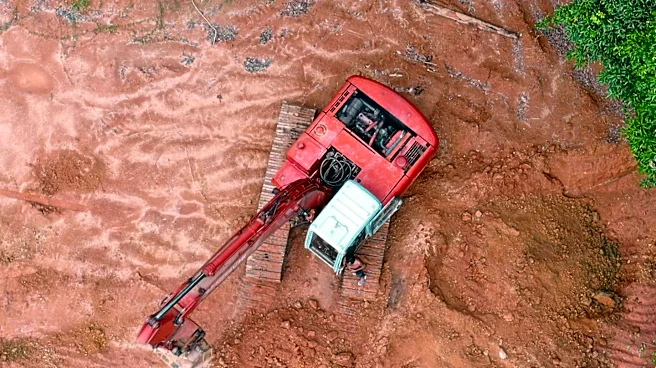
includes approximately 50 acres of untouched old-growth forest. Despite Gibson's strong opposition and efforts to prevent the project from impacting his land, EKPC utilized its power of eminent domain to acquire an easement. Gibson had offered alternative routes and engaged an attorney, Charles Williams, but EKPC stated that alternative paths would be more expensive to build, requiring Gibson to cover an additional cost of around $100,000. Ultimately, EKPC paid Gibson $35,000 for about 5 acres, at a rate of approximately $7,500 per acre, and began clearing the land in August. The project aims to improve the reliability of electric service for the Cub Run community, which currently relies on a distribution line nearing overload, potentially causing extended outages during peak demand.
Why It's Important?
This situation highlights the ongoing tension between infrastructure development and environmental preservation, particularly concerning old-growth forests. The use of eminent domain by a public utility to acquire private land, even against the landowner's wishes and despite the ecological significance of the property, underscores the legal powers granted to such entities for public service projects. The destruction of old-growth forest, which is a rare and vital ecosystem, has significant environmental implications, including the loss of biodiversity, reduced air and water quality, and disruption of natural habitats. For landowners like Gibson, it represents a loss of generational heritage and a perceived injustice, raising questions about property rights and the valuation of natural resources versus public utility needs. The project's stated goal of improving electrical reliability for 1,800 homes in the Cub Run area demonstrates the critical balance utilities must strike between serving community needs and minimizing environmental impact.
What's Next?
Construction of the power line is currently underway, with a 100-foot wide swath of forest already cleared. EKPC has stated that trees must be removed and prevented from growing within 50 feet on each side of the transmission line for safety and reliability. Lonnie Lee Gibson, having lost his legal battle, hired a logging company to harvest some of the trees that were slated for removal. The completion of the transmission line is expected to enhance the reliability of electric service in the Cub Run community, particularly during periods of high electricity demand. However, the environmental impact of the cleared old-growth forest is permanent, and the incident may fuel further discussions and potential legal challenges regarding eminent domain powers and environmental protection in similar future projects across the U.S.
Beyond the Headlines
The case of Lonnie Lee Gibson's old-growth forest in Hart County delves into the complex ethical and legal dimensions of land use and environmental stewardship. It brings to light the inherent conflict when private property rights, especially those tied to ecological value and family heritage, clash with the broader public interest as defined by utility companies and state laws. The concept of 'old-growth forest,' while not officially defined, represents a critical and increasingly rare natural resource, with only a small percentage remaining in the eastern U.S. The decision to prioritize infrastructure development over the preservation of such a unique ecosystem raises questions about long-term environmental policy and the true cost-benefit analysis of such projects. It also highlights the power imbalance between individual landowners and large corporations or public utilities, even when the landowner is advocating for environmental protection. This incident could serve as a precedent or a catalyst for future debates on how to balance essential public services with the irreplaceable value of natural landscapes.