





What's Happening?
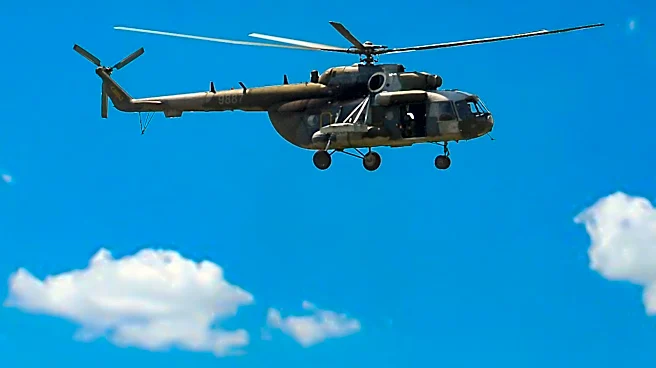
The Central Intelligence Agency (CIA) has restored an Mi-17 helicopter that played a crucial role in the initial U.S. response to the September 11 attacks. This aircraft delivered the first group of CIA officers, code-named JAWBREAKER, to Afghanistan’s
Panjshir Valley on September 26, 2001. The team arrived 15 days after the attacks, carrying significant funds to recruit and equip Afghan allies, gather intelligence, and prepare for the U.S. campaign against al-Qaeda and the Taliban. The Mi-17 was chosen for its Soviet origin, allowing it to blend in with local aircraft used by both the Northern Alliance and the Taliban. It lacked a transponder for identification by U.S. aircraft, so 'USA' markings and an unfinished American flag were painted on its stabilizers, visible only from the air. The helicopter, given the call sign '9-11-01', flew over 300 missions in Afghanistan before its service concluded in 2012. It is now displayed near CIA headquarters in Langley, Virginia, following a year-long restoration effort that included sealing fuselage holes and repainting to replicate its 2001 appearance.
Why It's Important?
The restoration and display of this Mi-17 helicopter serve as a tangible reminder of the immediate and covert actions taken by the U.S. intelligence community following the 9/11 attacks. It highlights the critical role of intelligence operations and specialized assets in national security responses to global threats. The story of the JAWBREAKER team underscores the high-stakes nature of early counter-terrorism efforts, involving direct engagement with local forces and significant logistical challenges in a hostile environment. The helicopter's unique modifications, such as the discreet U.S. markings, illustrate the ingenuity and operational secrecy employed by the CIA. This artifact provides historical context to the beginning of the U.S. military and intelligence presence in Afghanistan, marking a pivotal moment in U.S. foreign policy and counter-terrorism strategy that shaped the subsequent two decades.
What's Next?
The restored Mi-17 helicopter will continue to be a prominent display at CIA headquarters, serving as an educational and commemorative piece for agency personnel and visitors. Its presence is likely to foster ongoing discussions about the history of U.S. intelligence operations, particularly in the context of post-9/11 counter-terrorism. The story of the JAWBREAKER team and the helicopter's role may be further integrated into intelligence training and historical narratives, emphasizing lessons learned from early engagements in complex geopolitical landscapes. The display could also inspire future generations of intelligence officers by showcasing the agency's adaptability and commitment in critical national security moments. The CIA museum, which also houses artifacts like former CIA officer David Tyson's rifle from the Qala-i-Jangi fortress uprising, will continue to curate and present such historical items to preserve the agency's operational legacy.
Beyond the Headlines
The restoration of the Mi-17 helicopter transcends a simple historical display; it symbolizes the enduring legacy of covert operations and the human element in intelligence work. The narrative surrounding the JAWBREAKER team, operating with millions in cash and forging alliances in a volatile region, highlights the ethical and strategic complexities inherent in intelligence gathering and asymmetric warfare. The helicopter itself, a Soviet-made aircraft adapted for U.S. clandestine missions, speaks to the pragmatic and often unconventional methods employed by intelligence agencies. This artifact also subtly reflects the broader geopolitical shifts and alliances that characterized the post-Cold War era and the immediate aftermath of 9/11, where former adversaries' equipment became instrumental in new conflicts. It underscores the continuous evolution of intelligence tactics and the critical balance between secrecy and operational effectiveness in safeguarding national interests.