


What's Happening?
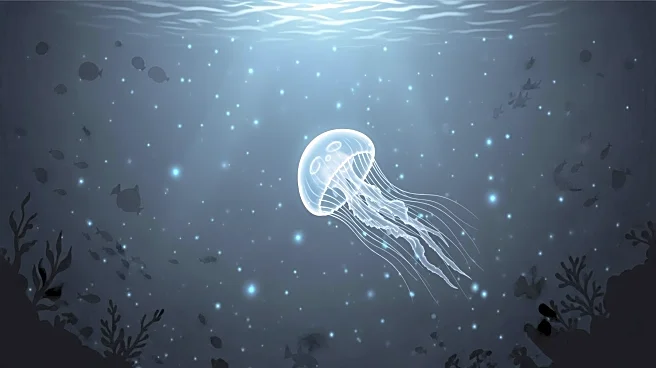
A recent deep-sea expedition off the coast of Argentina has led to the discovery of a rare giant phantom jellyfish, among other significant findings. Conducted by the Schmidt Ocean Institute's research vessel Falkor (too), the mission explored deep-water
ecosystems along Argentina's coastline. The team, led by Dr. María Emilia Bravo from the University of Buenos Aires and CONICET, documented a vibrant marine landscape, including a large Bathelia candida coral reef and 28 potential new species. The expedition also recorded Argentina's first deep-water whale fall and observed ancient coral gardens. Despite the remote location, traces of human activity, such as fishing gear and plastic debris, were found.
Why It's Important?
This expedition highlights the rich biodiversity of the Argentine deep sea, which was previously underestimated. The findings could have significant implications for marine biology and conservation efforts, as they reveal the existence of complex ecosystems that are both diverse and vulnerable. The discovery of human debris in such remote areas underscores the pervasive impact of human activity on marine environments. The research provides valuable data that could inform future conservation strategies and policies aimed at protecting these ecosystems. Additionally, the identification of new species and ecosystems could enhance our understanding of marine biodiversity and its role in global ecological processes.
What's Next?
The samples collected during the expedition will be analyzed to gain insights into the chemical, physical, and biological connections within these ecosystems. This research could lead to a better understanding of how these ecosystems function and their vulnerability to environmental changes. The findings may prompt further exploration and study of the South Atlantic's deep-sea environments. Researchers and policymakers might use this data to advocate for stronger protections and sustainable management practices for these newly discovered ecosystems. Continued collaboration between international scientific communities will be crucial in advancing this research and implementing effective conservation measures.
Beyond the Headlines
The discovery of human debris in such remote oceanic depths raises ethical and environmental concerns about pollution and its long-term effects on marine life. This finding highlights the need for global efforts to reduce marine pollution and its impact on biodiversity. The expedition's success in uncovering new species and ecosystems also emphasizes the importance of investing in scientific research and technology to explore and understand the largely uncharted deep-sea environments. These efforts could lead to breakthroughs in marine science and contribute to global biodiversity conservation initiatives.