



What's Happening?
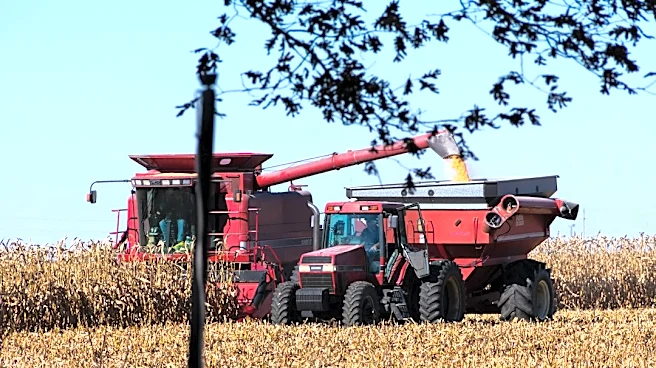
Nebraska Governor Jim Pillen has issued two executive orders providing a 90-day diesel tax holiday for agricultural producers and waiving weight limits for seasonal crop transport. These orders aim to reduce fuel costs for farmers and haulers during harvest
season. According to Lee Will, chief operating officer for the state of Nebraska, the Governor is having the Department of Revenue issue a waiver to waive penalties from the federal level, asserting this is within his purview. However, State Senator Danielle Conrad has questioned the legality of these actions, stating that setting tax policy is the Legislature's job, not the Governor's. Conrad also raised concerns about the potential impact on the state budget, which is already facing a significant shortfall. The fiscal impact is estimated to be between $1 million and $5 million in lost revenue for the Nebraska Department of Transportation, which Will suggests could be recouped later by adjusting the variable gas tax. Senator Brad von Gillern, chairman of the Legislature’s Revenue Committee, expressed skepticism about tax holidays in general, especially given the projected budget deficit, but acknowledged the urgency of the current situation for farmers.
Why It's Important?
These executive orders are important because they highlight a potential conflict between the executive and legislative branches regarding tax policy and budgetary authority in Nebraska. If the Governor's actions are deemed to overstep his constitutional powers, it could set a precedent for future executive actions on fiscal matters, potentially undermining the legislative process. The financial implications, though estimated to be relatively small by the state's COO, are significant in the context of Nebraska's existing budget shortfall. Any reduction in state revenue, even temporary, could exacerbate financial pressures and necessitate cuts in other public services or future tax adjustments. For the agricultural sector, the relief is intended to mitigate high fuel costs during a critical harvest period, directly impacting the profitability and operational efficiency of farmers and haulers. However, the debate over the legality and fiscal impact could create uncertainty and political tension, especially as it comes just a month before Election Day, leading to accusations of political maneuvering rather than genuine policy relief.
What's Next?
The legality of Governor Pillen's executive orders is likely to be further scrutinized, with Senator Conrad indicating that the Attorney General may need to weigh in on the matter. This could lead to legal challenges or formal opinions that clarify the boundaries of executive power in Nebraska regarding tax policy. The fiscal impact of the 90-day tax holiday will be closely monitored, and the Nebraska Department of Transportation may need to adjust the state's variable gas tax later in the year to compensate for lost revenue, as suggested by Lee Will. Politically, the timing of these orders, close to Election Day, suggests they will remain a point of contention in the gubernatorial race. Opponents may continue to frame them as a political tactic, while supporters will emphasize the immediate relief provided to the agricultural community. The broader discussion about the state's budget deficit and the appropriate mechanisms for tax relief will likely continue in the upcoming legislative session.
Beyond the Headlines
Beyond the immediate policy and political implications, this situation touches upon fundamental principles of governance, particularly the separation of powers. The debate over whether the Governor can unilaterally enact tax policy raises questions about the checks and balances designed to prevent overreach by any single branch of government. It also highlights the ongoing tension between immediate economic relief measures and long-term fiscal stability, especially in states facing budget challenges. The reliance on executive orders for such measures, rather than legislative action, could indicate a growing trend of executive authority being used to bypass potentially slower or more contentious legislative processes. This could have long-term implications for democratic accountability and the balance of power within state government, potentially leading to increased polarization and a less collaborative approach to policymaking. The incident also underscores the significant influence of the agricultural sector in Nebraska's political landscape, demonstrating how its needs can drive rapid, albeit controversial, policy responses.