






What's Happening?
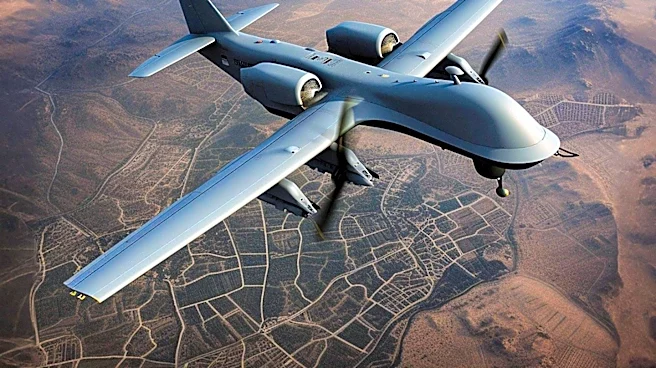
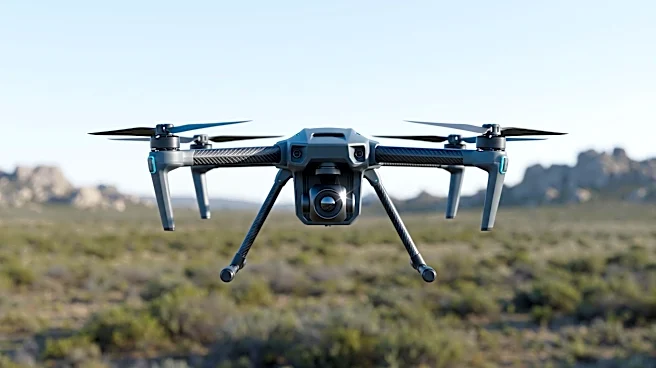
The Pentagon has delivered more than 25,000 unmanned and counter-drone systems to U.S. Central Command (CENTCOM) in 2026, representing an investment of approximately $782 million. The majority of these, over 24,000, are counter-drone systems deployed
through Joint Interagency Task Force 401 to safeguard forward-deployed forces from drone attacks. Additionally, the deliveries included over 1,300 one-way attack drones designed for precision strikes at extended ranges. CENTCOM also received more than 100 uncrewed surface and underwater vessels to enhance its maritime reconnaissance and strike capabilities. The Pentagon is actively expanding production on commercial lines and utilizing modular software to accelerate the deployment of new equipment to troops, aiming to provide commanders with cost-effective systems for large-scale use, thereby reducing reliance on expensive munitions.
Why It's Important?
This significant delivery of unmanned and counter-drone systems underscores a strategic shift in U.S. military doctrine towards leveraging advanced technology for defense and offense. The emphasis on lower-cost, high-volume systems indicates an effort to maintain a technological edge while optimizing resource allocation. By providing commanders with numerous affordable options, the U.S. military can potentially reduce the expenditure on high-cost munitions, which has substantial implications for defense budgets and procurement strategies. The expansion of maritime reconnaissance and strike capabilities through uncrewed vessels also signals a growing focus on naval dominance and surveillance in critical regions. This initiative is crucial for protecting U.S. forces and projecting power, particularly in areas like CENTCOM's operational theater, which faces evolving threats from various adversaries.
What's Next?
The Pentagon plans to continue supplying U.S. Central Command with these advanced systems while also expanding deliveries to U.S. forces in the Pacific and Europe, as well as across the broader joint force. This effort is also laying the groundwork for the establishment of Autonomous Warfare Command, a planned four-star combatant command slated to be operational by October 1, 2027. Owen West, chief executive of Project Agincourt and the Pentagon’s direct reporting portfolio manager for unmanned systems, stated that the current deployment is just the beginning, emphasizing a commitment to out-innovate, out-build, and out-adapt any adversary on the battlefield. This indicates a sustained and growing investment in autonomous and unmanned systems as a core component of future U.S. military operations.
Beyond the Headlines
The rapid deployment and planned expansion of unmanned and counter-drone systems raise profound questions about the future of warfare and military ethics. The increasing reliance on autonomous systems could lead to a reduction in human casualties for U.S. forces, but it also introduces complexities regarding accountability and decision-making in combat. The development of Autonomous Warfare Command suggests a long-term vision where AI and robotics play an even more central role, potentially transforming military strategy and operational dynamics. This shift could also trigger an arms race in autonomous technologies among global powers, leading to new challenges in international security and arms control. The ethical implications of AI-driven warfare, including the potential for algorithmic bias and unintended escalation, will likely become a more prominent area of debate and policy development.