



What's Happening?
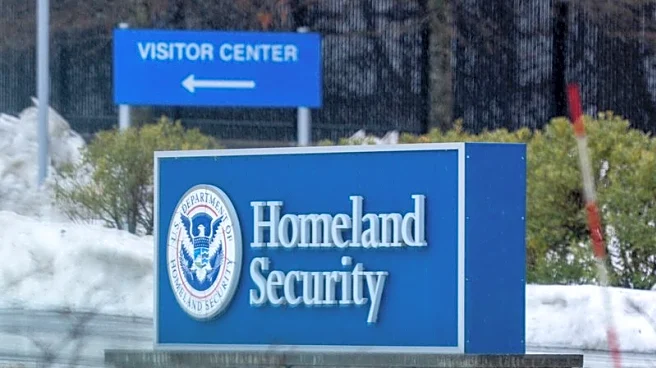
Governor Kelly Ayotte announced that plans to convert a warehouse in Merrimack, New Hampshire, into an immigration detention facility have been canceled. The proposed facility, part of a $38 billion initiative under President Trump's administration, aimed
to establish a new detention model with a capacity to incarcerate over 92,000 people nationwide. The Merrimack facility alone was expected to house between 400 to 600 detainees. The decision to halt the project follows significant local opposition, including protests and concerns from Merrimack residents and officials about the strain on local resources and potential loss in property tax revenue. Ayotte's announcement came after discussions with DHS Secretary Kristi Noem, who acknowledged the town's concerns.
Why It's Important?
The cancellation of the Merrimack ICE facility highlights the power of local communities in influencing federal decisions, especially regarding controversial projects. This development is significant as it reflects the broader national debate on immigration policies and the establishment of detention centers. The decision may impact President Trump's mass deportation agenda by limiting the expansion of detention facilities. It also underscores the importance of federal and local government collaboration, as seen in Ayotte's approach to addressing community concerns. The outcome may encourage other communities facing similar proposals to voice their opposition, potentially affecting future immigration policy implementations.
What's Next?
Following the cancellation, there may be increased legislative efforts to ensure local consent is required for future detention facility projects. New Hampshire's congressional delegation has already introduced legislation to block the Department of Homeland Security from opening new facilities without local approval. This move could set a precedent for other states, potentially leading to more stringent regulations on federal projects that impact local communities. Additionally, the decision may prompt further discussions between state and federal officials to find alternative solutions for immigration detention that align with community interests.
Beyond the Headlines
The cancellation of the Merrimack facility may have broader implications for the relationship between federal immigration policies and local governance. It raises questions about the ethical considerations of placing large detention centers in communities that oppose them and the potential social and economic impacts on those areas. The situation also highlights the role of public activism and community organizing in shaping policy decisions, suggesting a shift towards more community-driven approaches in addressing national issues.