



What's Happening?
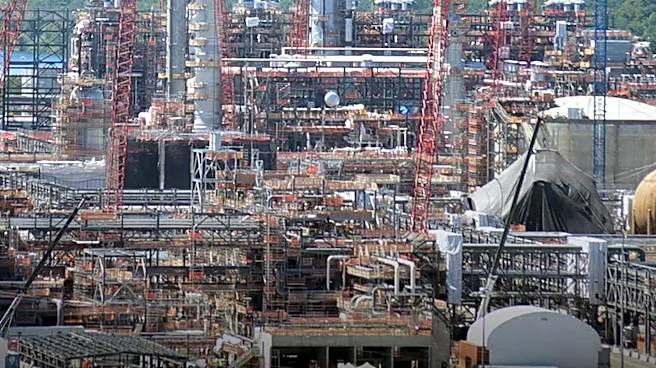
Ontario Power Generation announced that the first BWRX-300 unit at its Darlington site, North America's inaugural small modular reactor (SMR) project, will not meet its October 2030 operational target and will exceed its initial budget of $7.7 billion
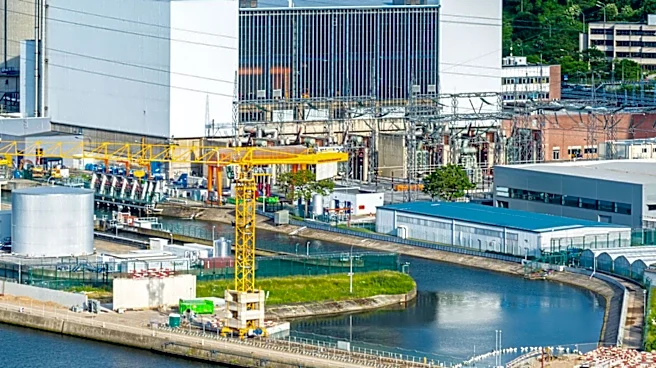
Canadian ($5.4 billion U.S.). The utility is currently undertaking a revised assessment of the project's cost and schedule, which is expected to be substantially completed by mid-2027. This marks the second delay for the project; when the design was initially announced in late 2021, completion was anticipated as early as 2028. The Darlington project, located east of Toronto, represents Canada's first new nuclear construction in over three decades and serves as a crucial test for SMR designs being developed in the U.S. and globally. The Tennessee Valley Authority has already secured a construction permit for a BWRX-300 from the Nuclear Regulatory Commission, and Blue Energy has initiated the NRC application process for a similar reactor in Texas.
Why It's Important?
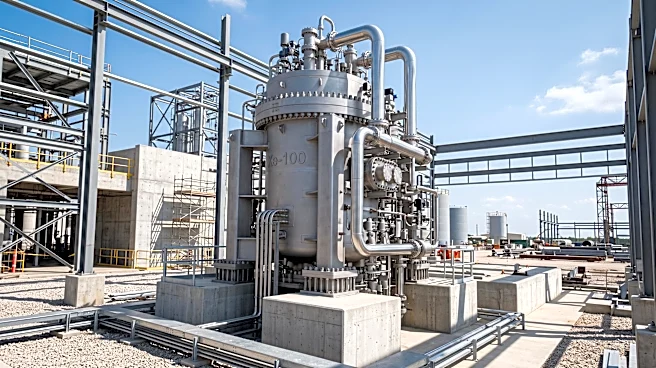
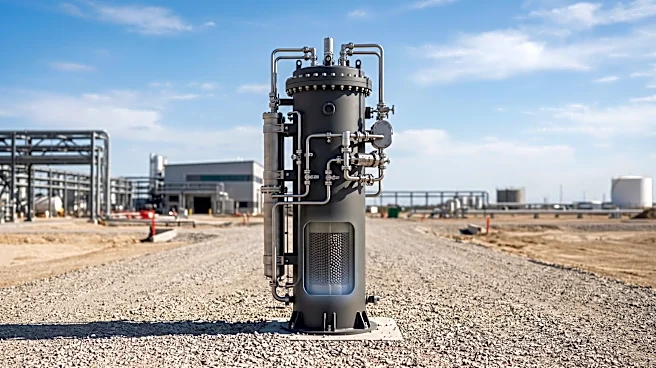
The delays and budget overruns for the Darlington SMR project have significant implications for the broader nuclear industry, particularly for the U.S. and other nations pursuing SMR technology. The BWRX-300, developed by GE Vernova Hitachi, utilizes light-water technology, which is common in existing nuclear fleets, and is designed to produce 300 megawatts of carbon-free electricity. This project was seen as a benchmark for the viability and scalability of SMRs as a clean energy solution. The challenges encountered in Canada could influence investor confidence, regulatory processes, and the perceived risk associated with SMR deployment in the U.S. and elsewhere. Successful and timely SMR development is crucial for meeting carbon reduction goals and diversifying energy portfolios, making these setbacks a concern for stakeholders banking on nuclear power's resurgence.
What's Next?
Ontario Power Generation is expected to finalize its revised cost and schedule assessment by mid-2027, which will provide new targets for the Darlington SMR project. The outcomes of this assessment will be closely watched by developers in the U.S., such as the Tennessee Valley Authority and Blue Energy, who are also pursuing BWRX-300 SMRs. The Nuclear Regulatory Commission's ongoing review of Blue Energy's application for a BWRX-300 in Texas may be influenced by the Canadian project's progress and challenges. Future developments in SMR technology and deployment in North America will likely be shaped by the lessons learned from the Darlington project, potentially leading to adjustments in project planning, risk assessment, and regulatory frameworks for subsequent SMR initiatives.
Beyond the Headlines
The challenges faced by the Darlington SMR project highlight the inherent complexities and financial risks associated with pioneering new nuclear technologies, even those based on established light-water reactor designs. This situation underscores the critical need for robust project management, realistic budgeting, and adaptive scheduling in large-scale infrastructure projects, particularly in the energy sector. The long-term implications could extend to public perception of nuclear energy's reliability and cost-effectiveness, potentially impacting policy decisions regarding energy mix and climate change mitigation strategies. The success or failure of early SMR deployments like Darlington will significantly shape the trajectory of nuclear power's role in the global energy transition, influencing investment in advanced reactor designs and the pace at which carbon-free electricity sources can be brought online.