





What's Happening?
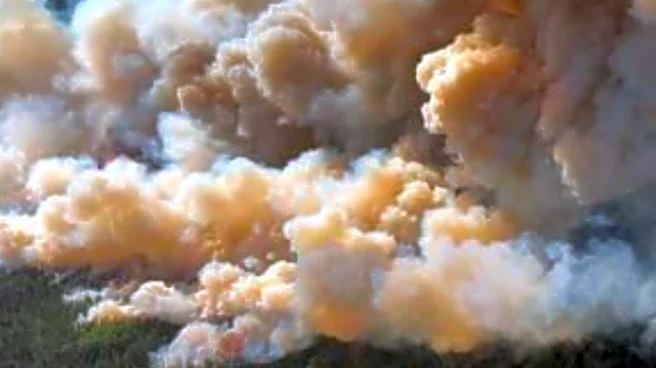
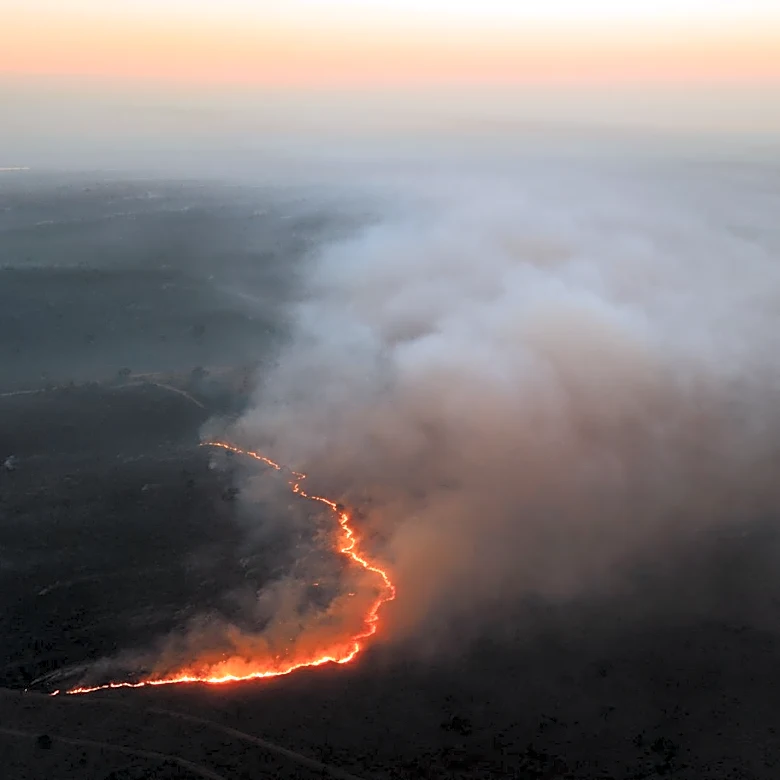
In early July 2026, a series of wildland fires erupted in the Sahtu Region of Canada's Northwest Territories near Great Bear Lake. These fires, tracked by the Environment and Climate Change division, have collectively burned nearly 169,000 hectares. The fires are part
of a broader trend identified in a 2025 report, which noted an increase in the number and intensity of wildland fires in Arctic regions. The fires are burning larger, hotter, and longer than in previous decades. The Visible Infrared Imaging Radiometer Suite (VIIRS) on the NOAA-21 platform captured images of these fires, highlighting thermal anomalies indicative of fire activity. The fires have resulted in dense aerosol concentrations, which can obscure sunlight and pose health risks, particularly to individuals with respiratory conditions.
Why It's Important?
The intensification of wildland fires in the Arctic has significant environmental and health implications. The increase in fire activity contributes to the release of carbon emissions, exacerbating climate change. The dense aerosols produced by these fires can reduce air quality, impacting human health and visibility. This trend underscores the urgent need for effective climate change mitigation strategies and highlights the vulnerability of Arctic ecosystems to rising temperatures. The fires also pose challenges for local communities and wildlife, potentially disrupting habitats and livelihoods.
What's Next?
Continued monitoring and research are essential to understand the long-term impacts of these fires on the Arctic environment. Policymakers may need to consider enhanced fire management strategies and international cooperation to address the root causes of increased fire activity. The situation may prompt further discussions on climate policy and the need for global efforts to reduce greenhouse gas emissions.