

What's Happening?
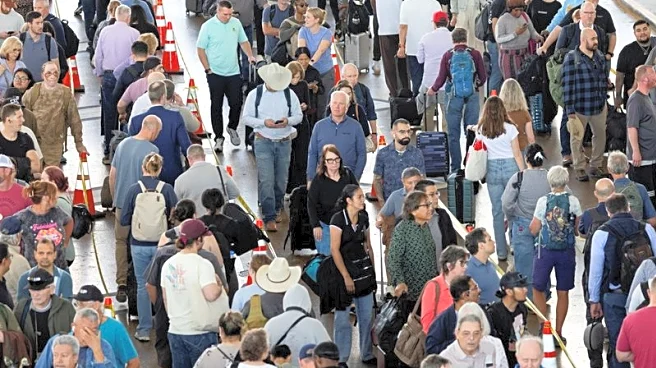
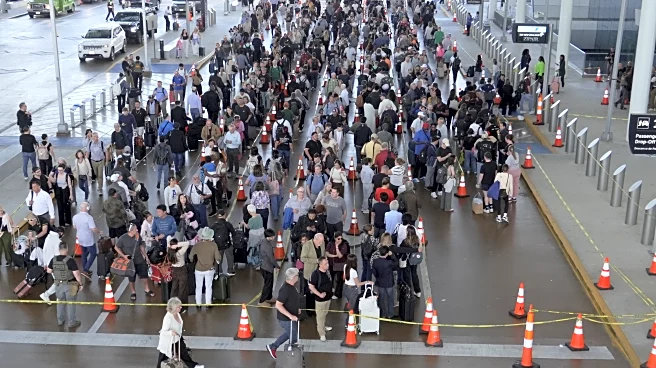
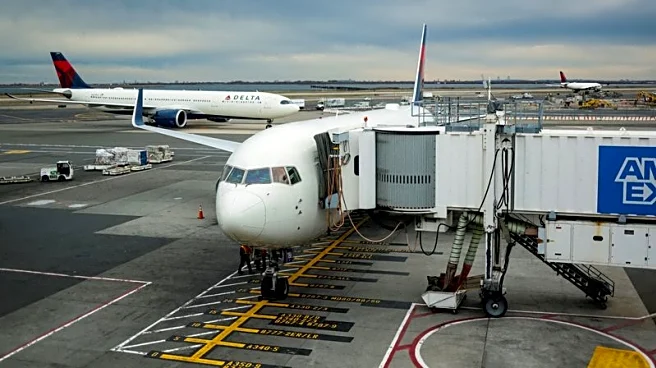
In response to the ongoing partial government shutdown, Immigration and Customs Enforcement (ICE) agents have been deployed to several U.S. airports to help manage long wait times experienced by travelers. The shutdown has led to a significant number
of Transportation Security Administration (TSA) workers calling in sick or resigning due to unpaid wages, exacerbating delays at airport security checkpoints. The deployment of ICE agents is intended to alleviate some of the pressure on TSA staff and reduce wait times for passengers. This move comes as officials in Washington continue to debate government funding, leaving the future of airport operations uncertain. A former TSA security chief has weighed in on the situation, highlighting the potential roles ICE agents could play in maintaining airport security and efficiency during this period.
Why It's Important?
The deployment of ICE agents to airports is a significant development in the context of the ongoing government shutdown, which has disrupted various federal operations. The involvement of ICE in airport security operations underscores the severity of the staffing shortages faced by the TSA. This situation highlights the broader impact of the shutdown on national infrastructure and public services, particularly in the transportation sector. The decision to use ICE agents may also raise questions about the agency's role and responsibilities, as well as the implications for civil liberties and privacy at airports. The outcome of this measure could influence future strategies for managing similar crises and affect public perception of federal agencies involved in security and immigration enforcement.
What's Next?
As the government shutdown continues, the situation at airports remains fluid. The effectiveness of ICE agents in reducing wait times will likely be closely monitored by both government officials and the public. If the shutdown persists, further measures may be necessary to ensure airport operations continue smoothly. Additionally, the ongoing political negotiations in Washington will play a crucial role in determining the duration of the shutdown and the eventual return to normalcy for federal employees, including TSA workers. Stakeholders, including airlines and passenger advocacy groups, may also push for alternative solutions to address the challenges posed by the shutdown.