

What's Happening?
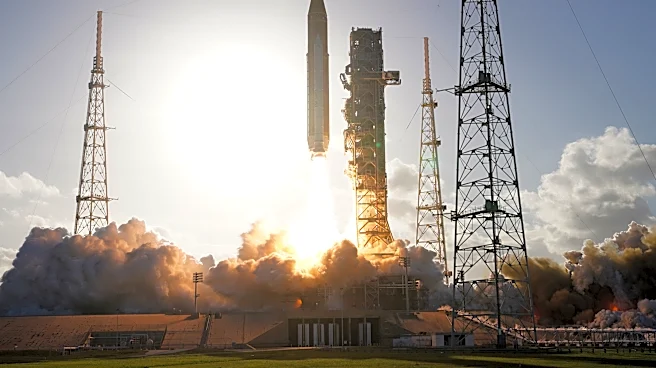
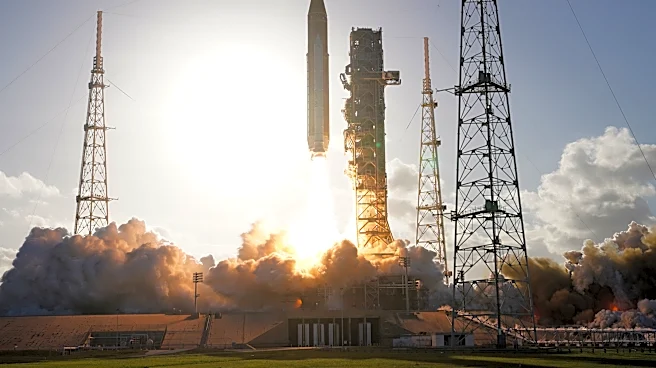
NASA's Artemis II mission has received clearance for its Orion capsule and crew to proceed with a critical rocket firing that will propel them from Earth orbit to the moon. The mission, which launched from Kennedy Space Center, includes commander Reid
Wiseman, Victor Glover, Christina Koch, and Canadian astronaut Jeremy Hansen. The crew has been testing the Orion capsule's systems and maneuverability, preparing for a trajectory that will take them around the moon's far side. The mission management team has approved the trans-lunar injection burn, a crucial step in the mission, following a review of the capsule's performance.
Why It's Important?
The Artemis II mission marks a significant milestone in NASA's efforts to return humans to the moon for the first time since the Apollo program. This mission is crucial for testing the Orion spacecraft's capabilities and the procedures needed for future lunar landings. The success of Artemis II will pave the way for subsequent missions, including potential moon landings near the lunar south pole. The mission also represents a collaboration between NASA and international partners, highlighting the global interest in lunar exploration and the potential for future international cooperation in space exploration.
What's Next?
Following the successful trans-lunar injection, the Artemis II crew will embark on a four-day journey to the moon, where they will conduct a flyby before returning to Earth. NASA plans to continue its Artemis program with additional missions, including Artemis III, which will involve rehearsing docking procedures with moon landers. The agency aims to establish a sustainable presence on the moon, with plans for regular landings and the development of a lunar base. These efforts are part of a broader strategy to prepare for future human exploration of Mars.