


What's Happening?
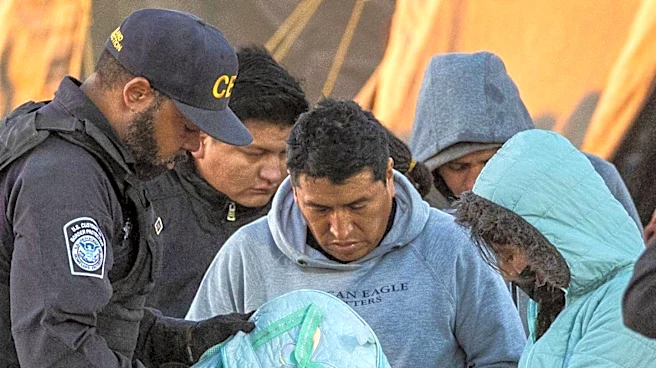
An unprecedented photograph has surfaced, depicting Tomás Zerón de Lucio, then head of Mexico's Criminal Investigation Agency, interrogating Joaquín 'El Chapo' Guzmán Loera after his capture in February 2014. The image, published by El Universal, shows
Zerón leaning against a wall while Guzmán, looking downcast, answers questions. This interrogation occurred before Guzmán's transfer from Mexico City International Airport to a Federal Police helicopter, destined for the Federal Center for Social Readaptation No. 1, known as El Altiplano. During this questioning, Guzmán reportedly stated he had no interest in confronting the Mexican government and had instructed his associates not to engage with police, asserting there would be no war. Another video from the same period shows Guzmán being transported in a vehicle with his eyes closed, appearing dejected, and confirming that the military personnel who detained him did not mistreat him. The release of this image follows journalist Héctor de Mauleón's revelation of three unreleased videos related to Guzmán's subsequent capture on January 8, 2016, in Los Mochis, Sinaloa. These later recordings, made at the Doux hotel, include Guzmán admitting to drug trafficking but denying theft, and show him covered in mud and washing his face after an escape attempt. Guzmán was extradited to the United States on January 19, 2017, where he was sentenced to life imprisonment.
Why It's Important?
The release of this previously unseen photograph and accompanying video footage offers a rare glimpse into the immediate aftermath of a high-profile capture of a major international drug lord. For the U.S., where Guzmán was eventually extradited and imprisoned, these details provide additional context to the extensive legal and law enforcement efforts involved in bringing him to justice. The insights into Guzmán's demeanor and statements during his interrogations, particularly his claims of not wanting conflict with the Mexican government, could be valuable for understanding the operational strategies and psychological profiles of cartel leaders. Furthermore, the ongoing legal processes involving Guzmán's sons in the U.S. and his own requests for a new trial and repatriation underscore the enduring impact of his criminal enterprise on U.S. judicial and correctional systems. The documentation of these events also highlights the complex and often dangerous nature of international drug enforcement, involving significant coordination between Mexican and U.S. authorities, and the persistent challenges posed by organized crime.
What's Next?
While Joaquín Guzmán Loera is currently serving a life sentence in a U.S. prison, his legal team continues to pursue avenues for a new trial and repatriation to Mexico, arguing the unfairness of his conviction process. The ongoing legal proceedings for his sons, Ovidio and Joaquín, who have reached plea agreements with the U.S. government, indicate that the legal ramifications of the Sinaloa Cartel's activities are still unfolding within the U.S. judicial system. The recent public release of these previously unseen images and videos could potentially reignite public interest and scrutiny into the details of Guzmán's captures and the broader context of U.S.-Mexico anti-drug efforts. These revelations might also influence public perception of the effectiveness and transparency of law enforcement operations against major drug cartels. Future developments will likely involve continued legal challenges from Guzmán's defense and the progression of cases against other cartel members in U.S. courts.
Beyond the Headlines
The surfacing of these images and videos goes beyond mere factual reporting, touching upon the broader narrative surrounding the capture of notorious figures like 'El Chapo.' It highlights the intricate dance between law enforcement, intelligence gathering, and the public's right to information, even years after the fact. The details of Guzmán's escape attempts, his use of tunnels, and his attempts to bribe officials, as revealed in the broader context of his captures, underscore the deep-seated corruption and sophisticated operational capabilities of drug cartels. The ethical implications of such high-stakes operations, including the treatment of detainees and the integrity of the legal process, remain a critical undercurrent. Moreover, the media's role in shaping public understanding of these events, through documentaries and news reports, contributes to the cultural perception of justice and criminality, influencing public policy debates on drug enforcement and international cooperation.