
What's Happening?
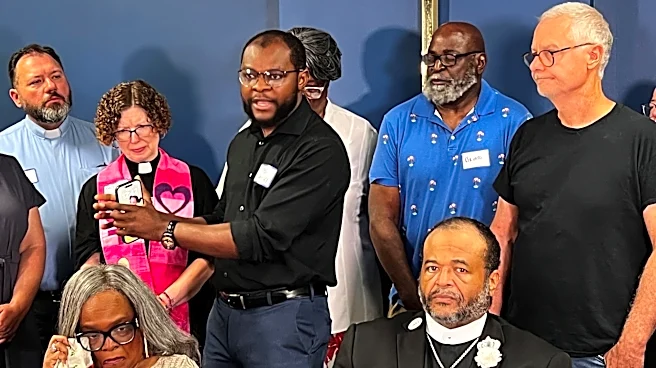
U.S. Representative Jahana Hayes (D-5th District) joined other officials in Danbury, Connecticut, to condemn the escalating actions of U.S. Immigration and Customs Enforcement (ICE) officers. Residents
and activists have expressed fear and anger over what they describe as aggressive tactics and seemingly random arrests, with dozens of people detained in a few days. Activists reported that ICE apprehended individuals at day laborer pickup sites, such as Kennedy Park, and used chains instead of handcuffs. This surge in arrests, which activists claim outpaces any single day of immigration arrests in Connecticut since the Trump administration's crackdown on illegal immigration, has led to calls for more action to protect immigrants and enforce the Connecticut Trust Act. Some community members also demand an investigation into potential cooperation between the Danbury Police Department and ICE, which could violate state law.
Why It's Important?
The situation in Danbury highlights significant tensions between federal immigration enforcement and local communities, particularly in diverse cities. The aggressive tactics reported by activists, including arrests at public spaces and the use of chains, raise concerns about civil liberties and human rights for immigrants, regardless of their legal status. The calls for enforcing the Connecticut Trust Act and investigating local police cooperation with ICE underscore a broader national debate on sanctuary policies and the extent of local government involvement in federal immigration matters. This issue impacts community trust in law enforcement, the well-being of immigrant families, and the social fabric of affected cities. The emotional response from residents and the criticism directed at elected officials, including Representative Hayes, reflect a deep-seated frustration with current immigration policies and their local consequences.
What's Next?
Activists in Danbury are preparing for continued ICE activity, with some reporting that safety precautions previously effective are no longer sufficient. The community is likely to maintain pressure on elected officials for more direct action to combat ICE raids and ensure the protection of immigrants' rights. Further investigations into the Danbury Police Department's potential cooperation with ICE may be initiated, which could lead to legal challenges or policy changes at the local and state levels. The ongoing debate surrounding the Connecticut Trust Act and its enforcement will continue to be a focal point. The situation could also influence future legislative efforts at both state and federal levels regarding immigration enforcement and the rights of undocumented individuals.
Beyond the Headlines
The events in Danbury reveal deeper societal implications beyond immediate immigration enforcement. The historical context of Kennedy Park, where day laborers were previously tricked and handed over to federal authorities, adds a layer of painful memory and distrust within the community. The reported shift from targeted arrests to more random apprehensions suggests a potential change in ICE's operational strategy, which could have widespread effects on immigrant communities across the country. The emotional toll on residents, with activists reporting sleepless nights and visible distress, underscores the psychological impact of such enforcement actions. This situation also highlights the ethical considerations of aggressive law enforcement tactics and the balance between national security concerns and the protection of individual liberties, regardless of immigration status.