







What's Happening?
The European Union has introduced the Industrial Accelerator Act (IAA) to bolster its economic resilience by enhancing local production of electric vehicles (EVs) and batteries. The IAA is designed to embed Union preference and Foreign Direct Investment
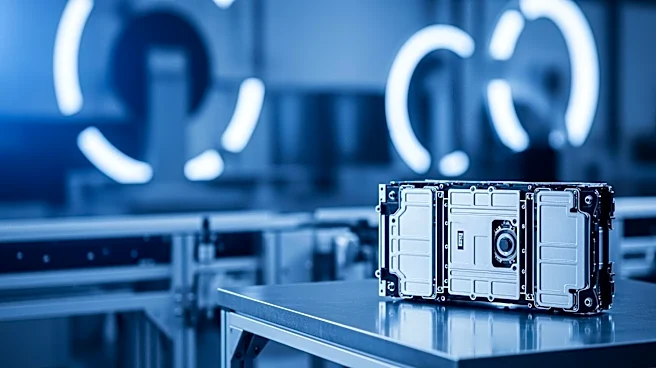
(FDI) conditions into law, setting a framework for low-carbon industrial scaling. The act mandates that only EVs made with local batteries and components can benefit from purchase subsidies and tax incentives. This move is part of a broader strategy to ensure a significant share of the EV technology stack, including batteries, electronics, and e-motors, is produced within Europe. The Transport & Environment (T&E) group supports the initiative but highlights the need to close existing loopholes to effectively scale a European battery value chain.
Why It's Important?
The IAA represents a significant shift in EU industrial policy, aiming to reduce dependency on non-European supply chains and enhance economic resilience. By focusing on local production, the EU seeks to safeguard jobs and advance its climate and security objectives. The act's emphasis on strategic components like batteries and EV technology is crucial for building a robust supply chain that can withstand geopolitical tensions and supply chain disruptions. This policy could potentially lead to increased investment in the European automotive sector, fostering innovation and competitiveness. However, the success of the IAA depends on its ability to enforce strict local content requirements and attract foreign investments that align with its goals.
What's Next?
The EU will need to address the loopholes identified by T&E to ensure the IAA's effectiveness. This includes removing exemptions that allow EVs with non-European components to qualify for incentives. The act's implementation will likely involve negotiations with industry stakeholders to balance local production goals with market realities. Additionally, the EU may need to develop complementary policies to support the entire battery value chain, including recycling and raw material sourcing. The success of the IAA could serve as a model for other regions looking to strengthen their industrial policies in the face of global economic challenges.